

Introduction
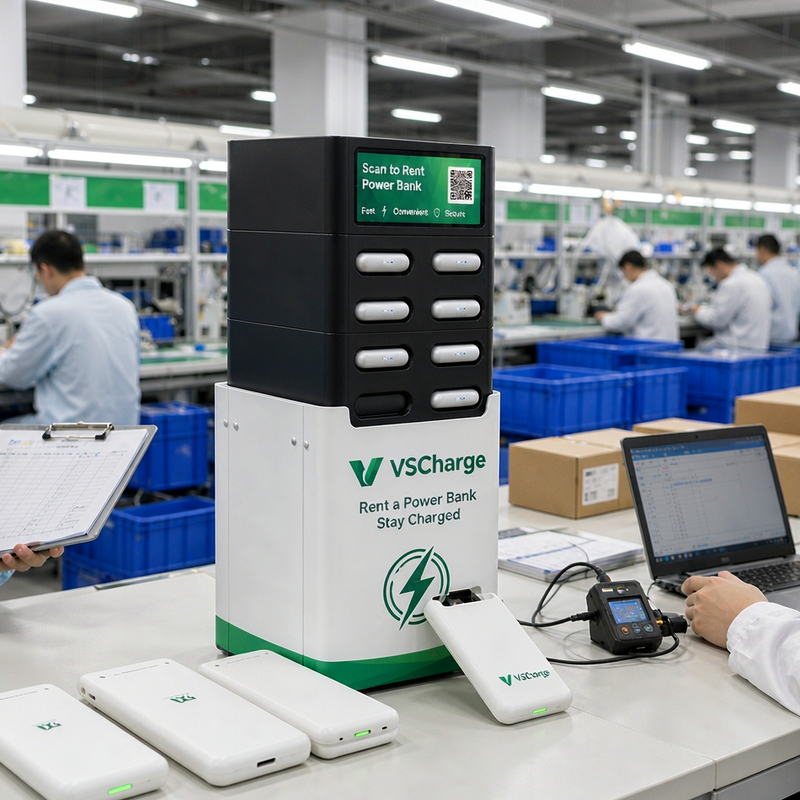
Shared power bank stations go through several preparation stages before they leave the factory. When purchasing them, customers often focus on product specifications, pricing, and delivery time. But what happens after an order is placed and before the equipment leaves the factory?
For shared power bank operators, distributors, and startups, receiving properly prepared equipment is essential. Problems with hardware, software configuration, or connectivity can cause unnecessary delays during installation and business launch.
At VSCHARGE, we understand that delivering a reliable product involves more than manufacturing and packaging. Each order requires careful preparation, hardware assembly, configuration, functional testing, and final inspection.
In this article, we take you through the key stages before shared power bank stations are shipped and explain what buyers should expect from a professional manufacturing partner.
1. Order Confirmation and Production Planning for Shared Power Bank Stations
Before production begins, the first step is to confirm the customer’s order details and project requirements.
Different customers may have different business models, target markets, and deployment plans. A distributor ordering multiple models for resale may need different configurations from an operator preparing to launch a local rental network.
The following details are typically confirmed:
- Station models and quantities: 4-slot, 8-slot, 12-slot, 20-slot, or larger-capacity stations.
- Screen configuration: Screen-equipped or non-screen models.
- Power bank quantities: Compatible power banks and required quantities.
- Branding requirements: Logo placement, cabinet colors, and approved customization details.
- Software requirements: VSCHARGE software or integration with the customer’s existing backend.
- Shipping arrangements: Destination, shipping method, and delivery requirements.
Confirming these details in advance helps the production team prepare the correct equipment and reduces unnecessary changes later. You can compare the available shared power bank rental station models before finalising your specification.
2. What Goes Into Shared Power Bank Stations: Component Preparation and Hardware Assembly
Once the order is confirmed, the factory prepares the components required for the selected station models.
Shared power bank stations are integrated electronic products. Their main components may include the cabinet, control board, charging slots, communication modules, screen, and power supply.
During assembly, these components are installed and connected according to the product design. The team checks the assembly condition to ensure that the equipment is ready for subsequent functional testing.
For screen-equipped models, the display and related electronic components are also prepared as part of the assembly process.
Compatible power banks are prepared according to the order specifications, including the required quantities and configurations.
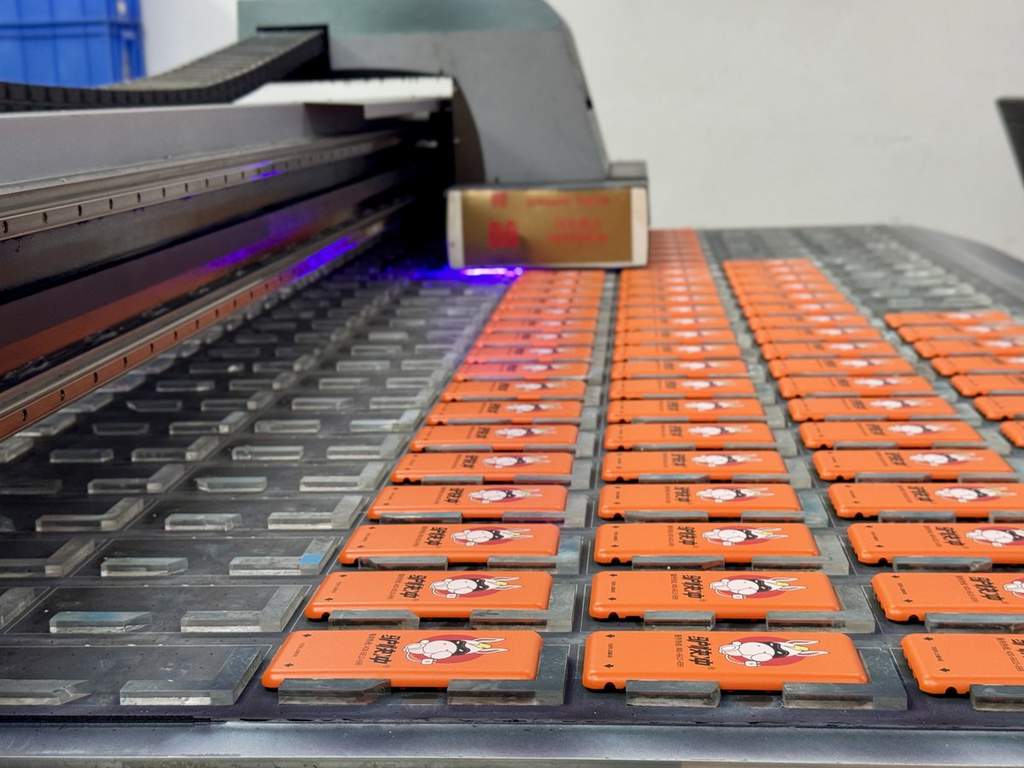
For customized orders, approved branding and product requirements are also considered during the relevant production stages.
Proper component preparation and assembly provide the foundation for reliable equipment operation. Our factory production process overview shows how each stage is organised on the line.
3. Software Configuration and System Integration
Hardware is only one part of a shared power bank rental solution. Software manages rental operations, device communication, and business data.
Before shipment, software requirements should be clarified according to the customer’s project.
For customers using the VSCHARGE software platform, relevant station settings can be prepared based on the agreed solution. Depending on the software configuration, the platform may support:
- Merchant and store management
- Station and power bank management
- Rental and return records
- Transaction and revenue reporting
- Multi-location management
- Cross-location returns within the supported network
For customers with their own software, hardware integration requirements should be discussed with the technical team in advance.
VSCHARGE supports communication protocol and API integration discussions for projects using customer-owned backend systems. Stations can also be preconfigured to connect to a specified MQTT environment when the project requirements have been confirmed.
The communication protocol, server information, network requirements, and integration scope should be clarified before shipment. This helps the technical team prepare the appropriate configuration and coordinate relevant testing.
The final setup depends on the selected hardware model, software solution, and project requirements. See the power bank rental software overview for the supported modules.
4. Hardware and Functional Testing of Shared Power Bank Stations
Before shipment, functional testing helps verify that the assembled equipment operates as expected.
Depending on the model and order requirements, testing may cover the following areas:
1. Power and startup: Checking whether the station powers on correctly and its main electronic components operate normally.
2. Charging slots: Checking the slots and confirming that the station can recognize compatible power banks.
3. Rental and return functions: Testing relevant rental and return operations to verify that the hardware responds correctly.
4. Screen and display: For screen-equipped models, checking whether the display starts and operates properly.
5. Network connectivity: Checking the configured connection method, such as Wi-Fi or cellular connectivity, according to the model and project requirements.
6. Software communication: Where applicable, checking whether the station communicates with the configured software platform or backend.
For projects involving customized software or customer-owned servers, the testing scope should be agreed upon with the technical team in advance.
These checks help identify potential hardware or configuration issues before the equipment reaches the customer.
The OEM and factory guide explains how the test scope is agreed for customised projects.
5. Quality Inspection Before Packaging
Shared power bank stations lined up for pre-shipment inspection at the factory

After functional testing, the equipment undergoes a final inspection before packaging.
Functional testing checks whether the equipment operates properly, while appearance inspection focuses on its external condition and order consistency.
The inspection may include:
- Cabinet appearance and surface condition
- Screen condition, where applicable
- Charging slot appearance and alignment
- Power bank appearance and quantity
- Accessories and related components
- Product labels and approved branding
- General equipment condition
For customized orders, branding and configuration details should also be checked against the confirmed order specifications.
Verifying these details helps reduce avoidable delivery issues and gives customers greater confidence when receiving their equipment. For market-specific requirements, our 2026 global compliance guide is a useful reference.
6. Packaging and Shipping Preparation
Once the required preparation and inspections are completed, the equipment moves to the packaging and shipping stage.
Shared power bank stations contain electronic components, screens, and other parts that need appropriate protection during transportation. Packaging arrangements should consider product dimensions, weight, shipping method, and destination.
Before shipment, the following details are generally checked:
- Station models and quantities
- Power bank quantities
- Accessories and included components
- Packaging condition
- Shipping labels and delivery information
- Relevant export and shipping documents
For international orders, shipping arrangements vary depending on the destination country, transportation method, order size, and customs requirements. Lithium batteries are classified as dangerous goods for air transport, so packing and documentation should follow the IATA Dangerous Goods Regulations and the ICAO Technical Instructions (Doc 9284). For the EU market, check the EU Batteries Regulation (EU) 2023/1542 with your logistics partner.
Customers should confirm the shipping terms and estimated delivery schedule with the sales team before placing an order.
Proper packaging and order verification help ensure that the correct equipment is ready for transportation. Destination-specific paperwork is covered in our US certification and customs clearance guide.
7. Why Pre-Shipment Preparation Matters for Shared Power Bank Stations
Pre-shipment preparation is more than an internal factory procedure. It can directly affect how smoothly customers install and launch their rental businesses.
A clear preparation process offers several advantages:
Reduced installation risks: Checking hardware functions and configurations before delivery helps reduce avoidable problems during installation.
Better project coordination: Confirming software, network, and hardware requirements in advance keeps customers and technical teams aligned.
More accurate deliveries: Verifying equipment quantities and accessories helps reduce order discrepancies.
Smoother business launches: When equipment arrives with the agreed configuration and preparation completed, customers can focus on installation, local testing, and business operations.
For overseas operators, these details are particularly important because troubleshooting or returning equipment may involve additional time and shipping costs.
Choosing a supplier with a clear production and pre-shipment process is therefore an important part of building a business around shared power bank stations.
8. How VSCHARGE Supports Your Shared Charging Project
VSCHARGE (Shenzhen Welink Energy Co., Ltd.) provides shared power bank stations, compatible power banks, and software solutions for customers in different markets.
As a manufacturer and solution provider, we understand that each project may require different hardware specifications, branding, software configurations, and network arrangements.
Our team supports customers with:
- Hardware selection: Recommending suitable station models based on deployment environments and business requirements.
- OEM customization: Supporting approved logo, branding, and product customization requirements.
- Software solutions: Providing rental software options for customers who need a management platform.
- API and MQTT integration: Discussing communication requirements for customers using their own backend systems.
- Pre-shipment preparation: Coordinating hardware configuration and relevant functional checks before delivery.
- International shipping support: Assisting with shipping arrangements for overseas customers.
Whether you are testing your first station, developing a local rental network, or planning a larger deployment, confirming project requirements before production helps make the process more efficient.
Our goal is to provide not only shared power bank hardware, but also practical support throughout preparation and delivery. The shared power bank rental station guide covers deployment planning in more detail.
Frequently Asked Questions
Q1: How long does it take to prepare shared power bank stations before shipment?
Preparation time depends on order quantity, selected models, customization requirements, and the production schedule. Stock availability and customized configurations may also affect the timeline. Please confirm the estimated lead time with the sales team.
Q2: Can I add my own logo to the stations and power banks?
Yes. VSCHARGE supports logo customization for stations and compatible power banks. Branding requirements should be confirmed before production.
Q3: Can VSCHARGE test the stations with my own software before shipment?
For customer-owned backend projects, communication and testing requirements can be discussed with the technical team in advance. The available testing scope depends on the integration environment and project configuration.
Q4: Can I request specific network configurations for my target market?
Yes, network requirements can be discussed according to the selected station model and destination market. Customers should provide their preferred connectivity method and relevant local network information for compatibility checks.
Q5: What should I check when receiving my equipment?
Check the delivered models, quantities, power banks, accessories, external condition, and packaging. It is also recommended to power on the stations and verify their main functions and network connection according to the project setup.
Conclusion
Shared power bank stations should be properly prepared long before they reach their final destination.
From order confirmation and component assembly to software configuration, functional testing, quality inspection, and export packaging, every stage of preparing shared power bank stations contributes to a smoother delivery and deployment experience.
At VSCHARGE, we believe reliable equipment starts with careful preparation.
Planning to launch or expand your shared power bank rental business? Contact VSCHARGE to discuss your station models, customization requirements, software integration, and shipping arrangements.