

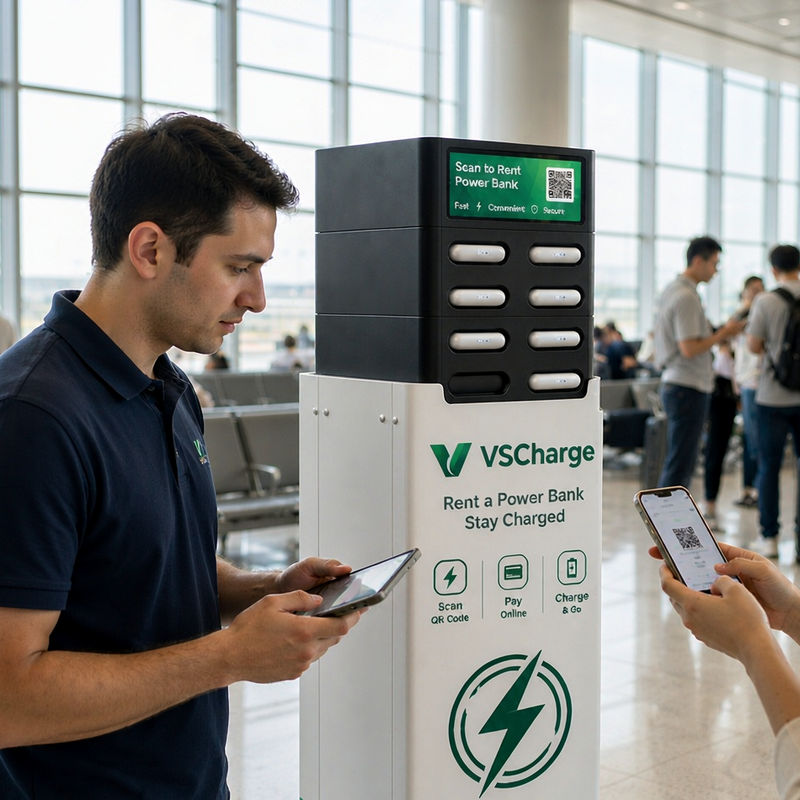
How to verify your hardware, software, payment integration, and rental processes before introducing your shared power bank business to the market.

Launching a shared power bank rental system involves more than purchasing rental stations. Before deploying equipment in shopping malls, restaurants, hotels, airports, or other public venues, operators need to make sure that every part of the system works reliably — from the moment a customer scans a QR code to the moment the rental fee is settled.
A successful pilot project helps identify potential technical issues, verify the user experience, and evaluate whether the business model is suitable for the target market. It also produces the operational data you need before committing to a larger rollout.
So, what should you test before officially launching your shared power bank rental network?
From hardware performance to software integration and payment processing, here are six essential areas to check before starting your first pilot.
1. Test the Hardware and Power Bank Performance
The rental station is the foundation of your shared power bank business. Before deployment, operators should verify that both the station and power banks work properly under normal operating conditions.
Key hardware checks include:
- Power bank dispensing: Scan the QR code and confirm that the selected power bank can be released successfully.
- Power bank return: Insert the power bank into an available slot and check whether the station recognizes it correctly.
- Charging performance: Confirm that returned power banks can recharge normally inside the station.
- Slot recognition: Check whether the backend accurately identifies the status of each slot.
- Screen and network: For screen-equipped models, verify that the display works properly and that the station can maintain a stable internet connection.
It is also important to test the power banks themselves, including battery capacity, charging cables, connectors, and charging performance.
For example, VSCHARGE offers different rental station configurations, including 4-slot, 8-slot, 12-slot, and larger-capacity models. Operators can select the appropriate configuration based on their expected rental demand and installation environment.
For an initial pilot, an 8-slot station can be a practical starting point, providing enough capacity to evaluate user demand without requiring a large initial investment.
2. Test the Rental Software and Backend Management
Hardware alone cannot operate a complete shared power bank rental business. The software platform connects customers, rental stations, power banks, and business operators.
Before launching your pilot, test the complete rental process from both the customer and administrator perspectives.
Customer-side testing:
- Scan the QR code to access the rental page.
- Check whether the rental instructions are clear.
- Confirm that users can complete the rental process.
- Verify that rental status and fees are displayed correctly.
- Test the return process and confirm that the rental session ends successfully.
Backend testing:
- Create and manage merchant or store accounts.
- Add rental stations and power banks to the system.
- Monitor station and power bank status.
- View rental orders and transaction records.
- Check revenue reports and profit-sharing records.
Operators should also confirm whether the software supports their intended business structure.
For example, a business operating multiple locations may need different account permissions for headquarters, agents, and individual store merchants.
Testing these functions before deployment helps prevent management problems when the network begins to expand.
3. Verify the Payment Integration
Payment processing is one of the most important parts of a shared power bank rental system.
Different markets have different payment preferences. Some customers prefer credit cards, while others commonly use Apple Pay, Google Pay, or local payment gateways.
Before launching your pilot, make sure the payment process matches your target market.
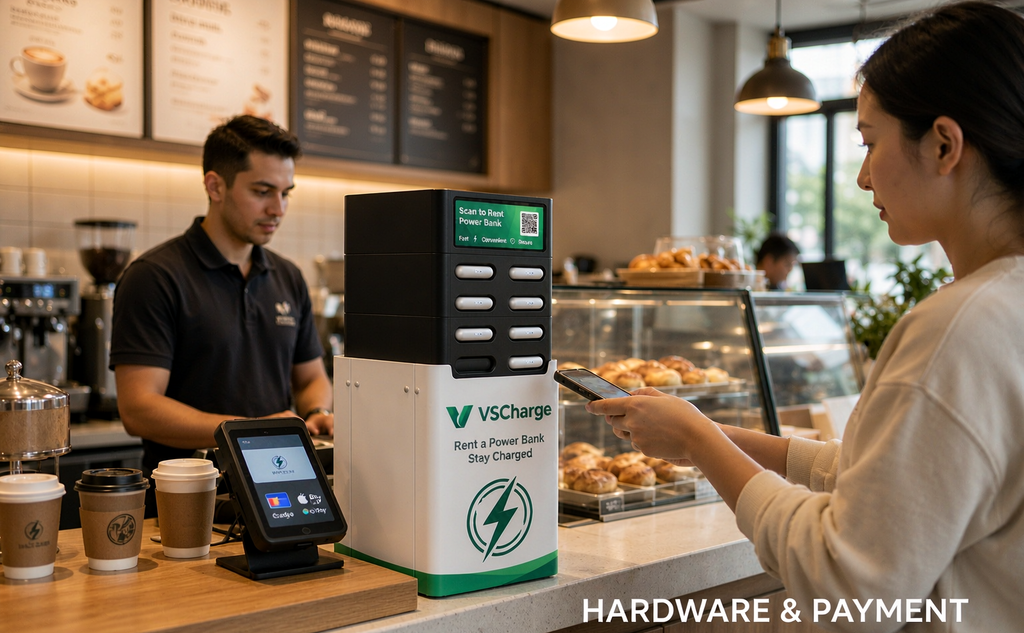
Important items to test include:
- Whether customers can complete payments successfully.
- Whether the system supports the required local payment methods.
- Whether payment authorization and transaction records are accurate.
- Whether rental fees are calculated correctly.
- Whether deposits are released or charged according to the rental rules.
- Whether refunds and failed transactions are handled properly.
Some shared power bank rental systems use a pre-authorization model.
In this process, the system first places a temporary hold on the customer’s payment method. After the power bank is returned, the actual rental fee is deducted and the remaining authorized amount is released.
If the power bank is not returned within the specified period, the system may charge the deposit according to the configured rules.
For operators who want to use their own payment accounts, it is important to confirm whether the software can integrate with their preferred payment gateway.
For example, Stripe supports card payments as well as Apple Pay and Google Pay, subject to account, market, and integration eligibility.
A successful payment test should cover the entire process, not just whether a customer can make a payment.
4. Test Network Connectivity and API Integration
A stable network connection is essential for communication between rental stations and the management platform.
Before deployment, operators should test the station’s network performance in the actual installation environment.
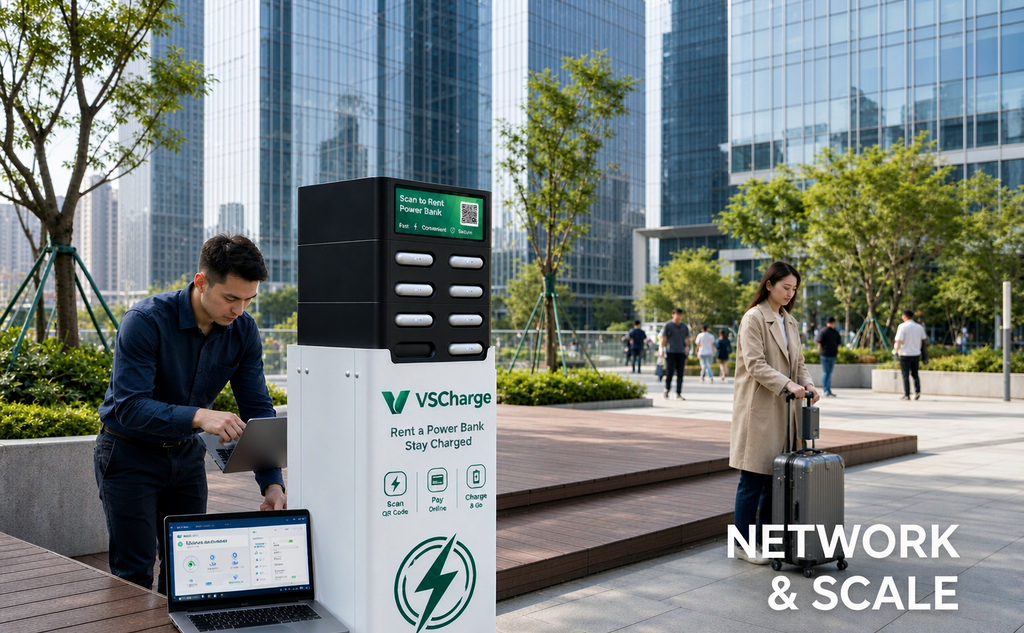
Depending on the model, shared power bank rental stations may support Wi-Fi, 4G, or other network configurations. Operators should check:
- Whether the station can connect to the internet reliably.
- Whether rental commands are transmitted successfully.
- Whether power bank rental and return events are reported to the backend.
- Whether device status updates are received correctly.
- Whether the system can recover normal communication after a network interruption.
For businesses that already have their own software platform, API and MQTT integration should be tested before the pilot begins.
In this situation, the rental station communicates with the customer’s backend instead of relying entirely on the supplier’s software platform.
Typical integration tests include:
- Sending rental commands from the customer’s backend.
- Receiving power bank rental and return notifications.
- Identifying power banks through their serial numbers.
- Receiving battery level information when a power bank is rented or returned.
- Monitoring station and slot status.
For example, VSCHARGE provides technical protocol documentation to support customers who want to connect rental stations to their own software systems.
The hardware can also be preconfigured to connect to the customer’s MQTT server before shipment, allowing engineers to complete the necessary hardware and communication checks before delivery.
The key is to verify that both hardware and software can communicate correctly before installing equipment at commercial locations.
5. Conduct Real-World Rental Tests
A system that works in a factory or office environment does not necessarily perform perfectly in a shopping mall, restaurant, or hotel.
Real-world testing is therefore an essential part of any pilot project.
Instead of immediately deploying multiple stations, operators should start with a small number of units in selected locations.
During this stage, focus on the following scenarios:
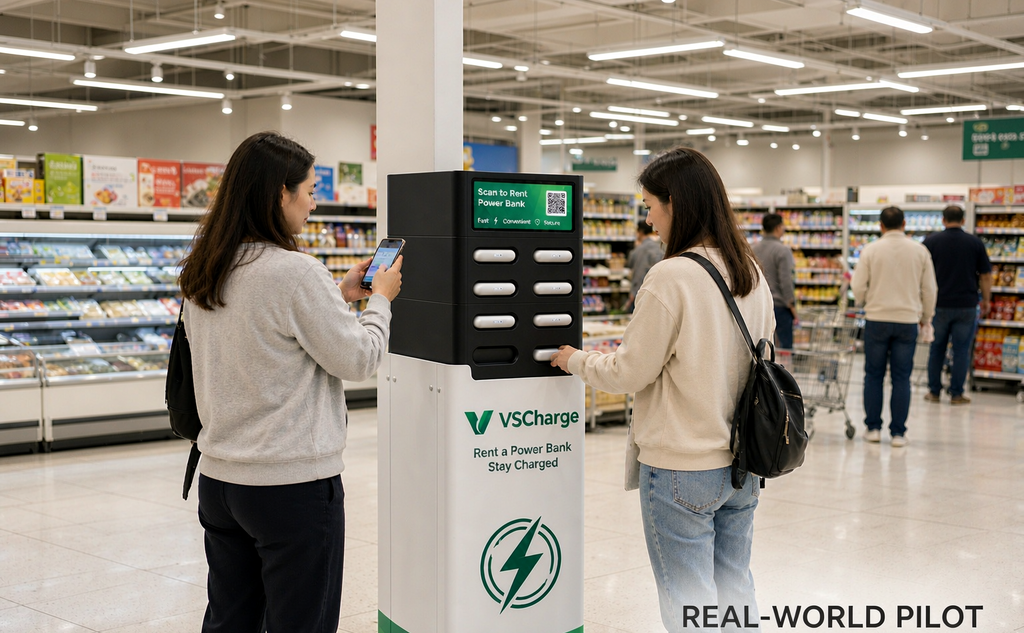
Test different customer experiences
Ask several users to complete the rental process independently. Observe whether they can understand the instructions, scan the QR code, make payments, and return power banks without assistance.
Test different rental scenarios
Check whether users can rent a power bank at one location and return it to another location, if cross-location returns are supported by the system.
Monitor equipment performance
Observe how frequently power banks are rented, how quickly they are returned, and whether the available inventory is sufficient during busy periods.
Evaluate the installation environment
Check network signal strength, screen visibility, station accessibility, and available space at each location.
Collect user feedback
Ask users whether the rental process is convenient and whether they encountered any difficulties.
These tests help operators understand actual customer behavior rather than relying only on assumptions.
For example, a station installed in a busy shopping mall may experience much higher rental demand than one placed in a small office. The results can help determine whether additional stations or more power banks are needed.
6. Evaluate the Results Before Expanding Your Network
After completing the initial testing period, operators should review the collected data and determine whether the pilot is ready for expansion.
Several important performance indicators can help evaluate the results.
| Performance Indicator | What to Evaluate |
|---|---|
| Rental Frequency | How often each station is used |
| Power Bank Utilization | How efficiently available power banks are being used |
| Average Rental Duration | How long customers typically keep power banks |
| Payment Success Rate | Whether customers can complete transactions successfully |
| Equipment Availability | Whether enough charged power banks are available |
| Technical Issues | Whether hardware, software, or network problems occur |
| Revenue Performance | Whether rental revenue meets business expectations |
These indicators help operators identify problems and improve their business operations.
For example, if a station frequently runs out of available power banks, the operator may need to increase inventory or install additional stations.
If rental activity is low, it may be necessary to reconsider the location, improve visibility, or adjust the marketing strategy.
It is also important to confirm that the software can support future expansion, including additional stations, merchants, management accounts, and payment integrations.
A well-planned pilot should not only prove that the equipment works. It should also provide useful information for making better investment and expansion decisions.
Why Choose VSCHARGE for Your Shared Power Bank Rental Pilot?
Choosing the right manufacturing and technology partner can make the pilot process much easier.
VSCHARGE (Shenzhen Welink Energy Co., Ltd.) provides shared power bank rental hardware, software solutions, and technical integration support for businesses in different markets.
Our solutions cover several key areas:
- Hardware Manufacturing: Different station configurations, including 4-slot, 8-slot, 12-slot, and larger-capacity models, with screen and non-screen options.
- Software Solutions: H5 rental interfaces, PC management backends, and customized Android and iOS applications.
- Payment Integration: Support for payment integration based on the customer’s business requirements and target market.
- API and MQTT Integration: Technical documentation and integration support for businesses using their own backend systems.
- OEM and Branding: Customized station appearance, logos, and branded software interfaces.
Whether you are starting with one sample station or preparing a larger commercial deployment, VSCHARGE can help you evaluate the appropriate hardware and software configuration for your project.
Our recommendation is to start with a clearly defined pilot plan, test the complete rental process, and gradually expand once the system meets your operational requirements.
Conclusion
Testing a shared power bank rental system before launching a pilot is an important step toward building a reliable rental business.
From hardware performance and software functionality to payment processing, network connectivity, and real-world user experience, every part of the system should be verified before large-scale deployment.
A small pilot helps identify potential issues early, reduce unnecessary investment, and provide valuable operational data for future expansion.
Planning to launch your own shared power bank rental business?
Contact VSCHARGE to discuss your project requirements and find a suitable hardware, software, and integration solution for your target market.