

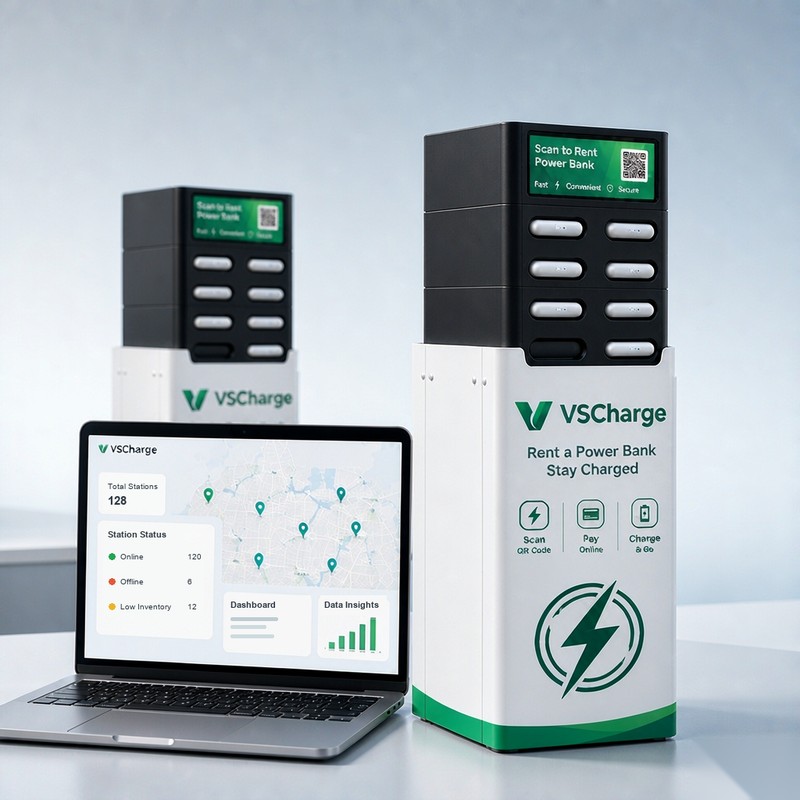
A shared power bank rental station is straightforward to run on its own. Managing a network of them across multiple locations involves far more than installing charging stations. As a business expands, operators need to monitor equipment, manage inventory, coordinate venue partners, and track rental activity and revenue.
Whether launching a few stations or expanding into several cities, a centralized approach helps keep operations organized. This guide covers essential management functions, rental software, and how to choose hardware for long-term growth.
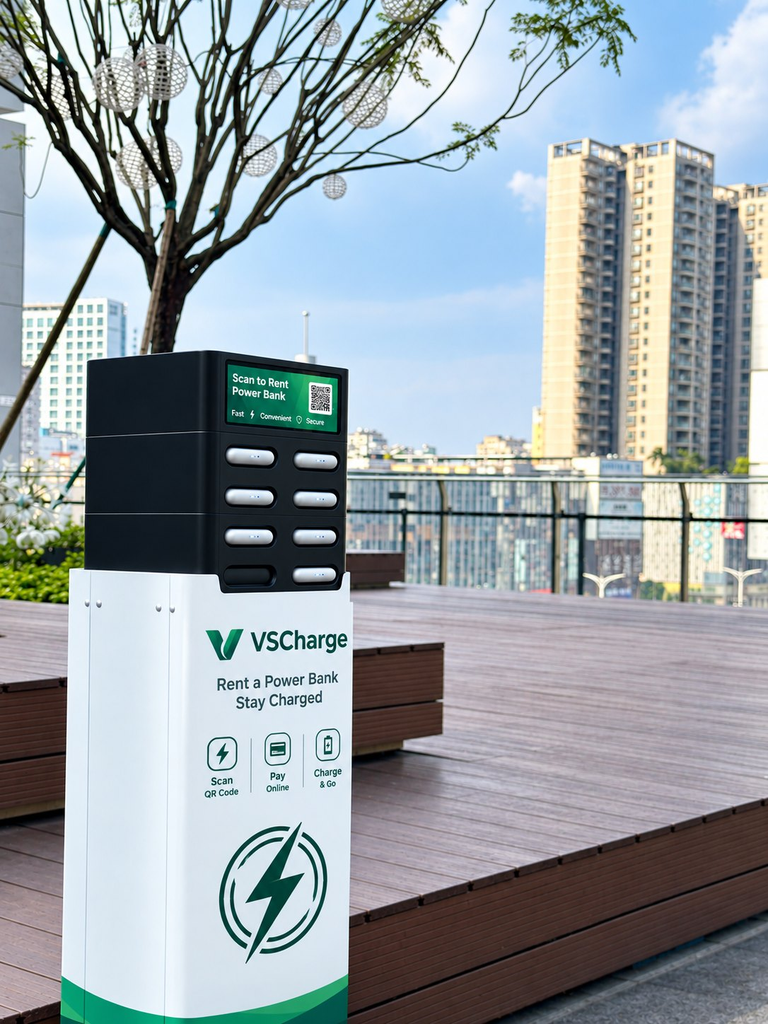
A VSCHARGE portable charger rental station in a public venue — one unit in a wider, centrally managed network.
1. Why Centralized Management Matters
When a business operates only one or two stations, checking equipment and rental activity manually may seem manageable. As more locations are added, however, it becomes harder to know which stations are working, where power banks are available, and which venues generate the most rentals.
A centralized platform connects compatible rental stations to one backend. Operators can review station information, rental records, store details, and revenue data without managing every location separately.
This is useful for networks in shopping malls, restaurants, hotels, convenience stores, and entertainment venues. Instead of treating each portable charger rental station separately, operators can manage the network as one coordinated service.
2. Monitor Rental Stations Remotely
Remote monitoring helps operators understand the condition of stations without visiting every site. Depending on the hardware and software configuration, a management platform may provide:
- Station connectivity: Check whether a station is online and communicating with the backend.
- Power bank availability: Review the number of available banks at each location.
- Rental and return records: Check transaction activity and identify unusual patterns.
- Device information: Review supported status data reported by the station and power banks
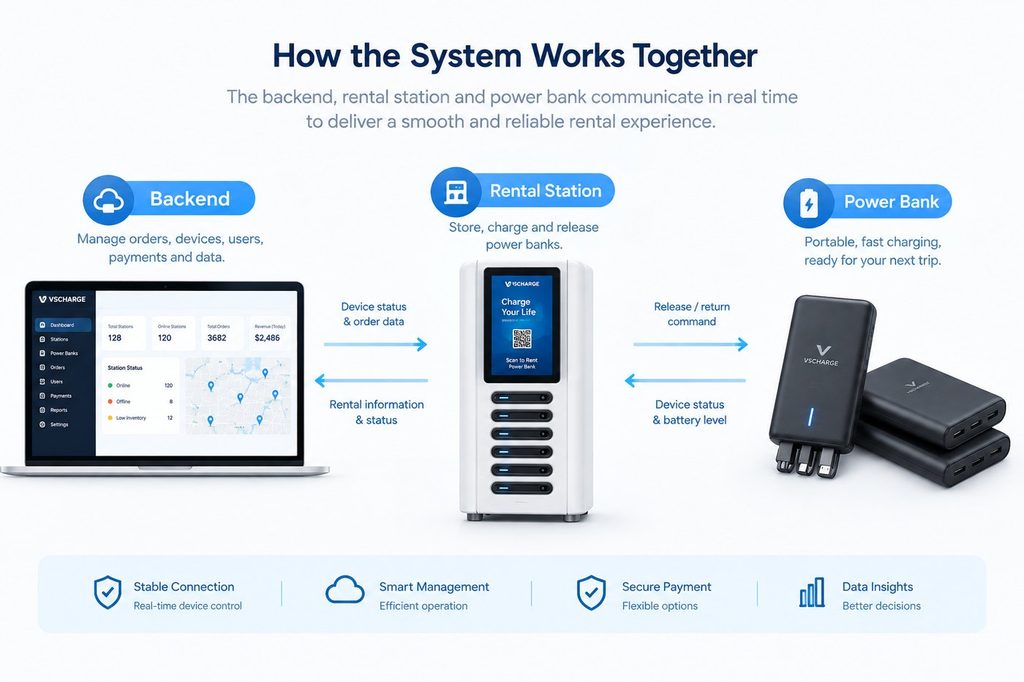
The backend, rental station and power bank exchange device status, orders and commands in real time.
These functions can help identify stations that are offline or running low on power banks. Available information depends on the station model, communication method, and software integration. Remote monitoring does not replace physical maintenance, but helps teams prioritize site visits.
3. Organize Multiple Stores and Business Partners
Many rental networks work with independent venues, franchise operators, or regional partners. Each partner may have its own locations, commercial terms, and revenue-sharing arrangement.
A suitable backend should make it possible to organize these relationships through merchant accounts, store records, and station assignments. Operators can then identify which stations belong to each venue and review the relevant operating records.
Check that the platform supports your required account structure, store records, and access permissions. A distributor operating across several cities may also need a higher-level view of the network. A clear structure makes it easier to add locations while keeping responsibilities and records organized.
4. Support Rentals and Returns Across Locations
One of the main benefits of a shared power bank network is that customers may be able to rent a power bank at one station and return it to another compatible station.
For example, a customer could rent a power bank at a shopping mall, use it while visiting nearby restaurants, and return it at a station in a different venue. This convenience can make the network more useful to customers.
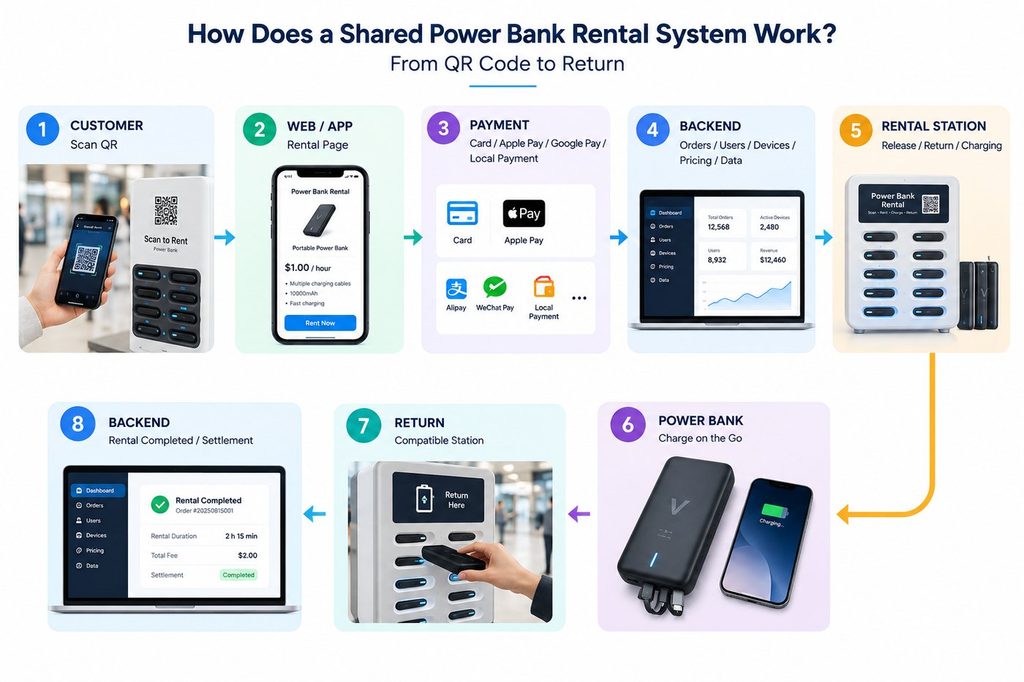
From QR scan to cross-location return: the steps a connected rental system has to coordinate.
Cross-location returns require coordinated hardware and software. Stations must identify the power bank correctly, communicate rental and return events, and update the relevant records in the backend. Operators should confirm that the selected station models and software support this function before deployment.
Evaluate a powerbank vending machine as part of the wider network, not only as a standalone cabinet. Device and platform compatibility is essential.
5. Track Revenue and Maintain Power Bank Availability
Rental demand can vary significantly between locations. A busy transport hub may have different usage patterns from a small café. Operators need reliable records to understand performance and allocate equipment appropriately.
A management platform can help review rental transactions, revenue reports, and profit-sharing records, depending on the software package. These records help operators compare locations, assess partners, and identify stations that may need repositioning.
Teams should also review power bank availability, identify high-demand locations, schedule replenishment, and keep backup inventory for busy periods. Physical checks help ensure devices are in good condition. Combining backend data with regular maintenance reduces empty stations and improves the customer experience.
6. Choose Software That Fits Your Business
The right software depends on your business model, technical resources, and plans for expansion. In general, operators can consider three approaches.
Ready-to-use rental platform: A provider-managed platform may include customer rental pages, station and power bank management, merchant and store records, transaction history, and reporting. This can suit businesses that want to launch without building a complete system themselves.
White-label software: A white-label solution allows an operator to present the rental service under its own brand. Depending on the scope, it may include a customized rental interface, business rules, merchant management, and payment integration. Confirm which functions are included and which require additional development.
Integration with your own backend: Businesses with an existing platform or technical team may prefer to connect rental stations to their own system through an API or communication protocol. Before ordering, confirm the available documentation, rental commands, return events, device identification, and testing requirements.
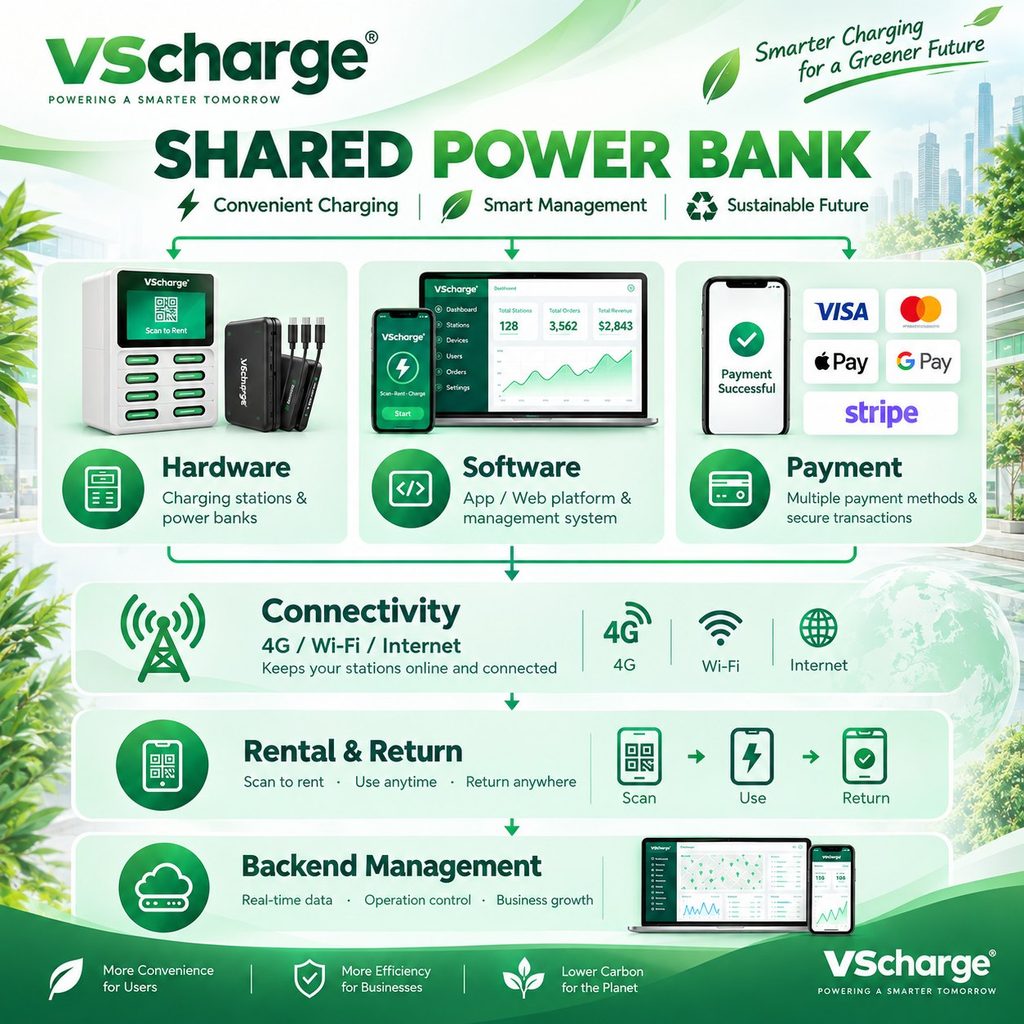
Hardware, software, payment, connectivity, rental and return, and backend management are the blocks to check before choosing a platform.
Choose software together with the hardware to reduce compatibility issues as the network expands.
7. Choose the Right Hardware and Manufacturing Partner
A rental station is a long-term asset. Compare station capacity, screen options, connectivity, power bank compatibility, certifications, spare parts, customization, and technical support—not just appearance or unit price.
When evaluating a shared power bank manufacturer or power bank rental station manufacturer, ask about product testing, production capacity, quality control, and experience supporting overseas projects. A reliable shared power bank supplier or power bank rental station supplier should also clarify lead times, warranty terms, packaging, and shipping arrangements.
For businesses building their own brand, an OEM shared power bank station or OEM power bank rental station may offer customized logos, colors, and design details. Check whether the supplier can also support software integration.
Search terms such as shared power bank factory, power bank kiosk manufacturer, and power bank station manufacturer can help identify potential suppliers. Make the final decision based on verified specifications, samples, and project requirements.
8. How VSCHARGE Supports Multi-Location Projects
VSCHARGE, operated by Shenzhen Welink Energy Co., Ltd., provides shared power bank rental stations, power banks, software solutions, and customization support for international projects.
The product range includes different station capacities and screen configurations. Customers can discuss hardware branding, OEM customization, rental software, and API integration according to project needs.
The software can support merchant and store management, cabinet and power bank records, rental activity, revenue reporting, and profit-sharing records. Customers with their own backend can discuss connecting compatible hardware through the relevant communication protocol.
Configuration depends on the target market, payment requirements, deployment scale, and software plan. Confirm required features and integration scope with VSCHARGE before ordering.
Frequently Asked Questions
Can multiple rental stations be managed from one backend?
Yes. Compatible stations can connect to a centralized platform, allowing operators to review device information and rental records in one place.
Can customers rent at one location and return at another?
This is possible when the hardware and software are configured to support cross-location returns. Confirm compatibility before deployment.
Can I connect the stations to my own software?
API or communication-protocol integration may be available, depending on the station model and project requirements. Technical details should be reviewed with the supplier.
How many stations should a new business start with?
Start with a pilot quantity that matches the available venues, budget, and local demand. Use the pilot to evaluate rental activity and operations before expanding.
Build a Rental Network That Can Grow
Successful multi-location operations depend on connected hardware, suitable software, clear partner management, and consistent maintenance. Plan these elements together to manage daily activity and prepare for expansion.
Contact VSCHARGE to discuss station capacity, OEM options, software, and integration for your project.