

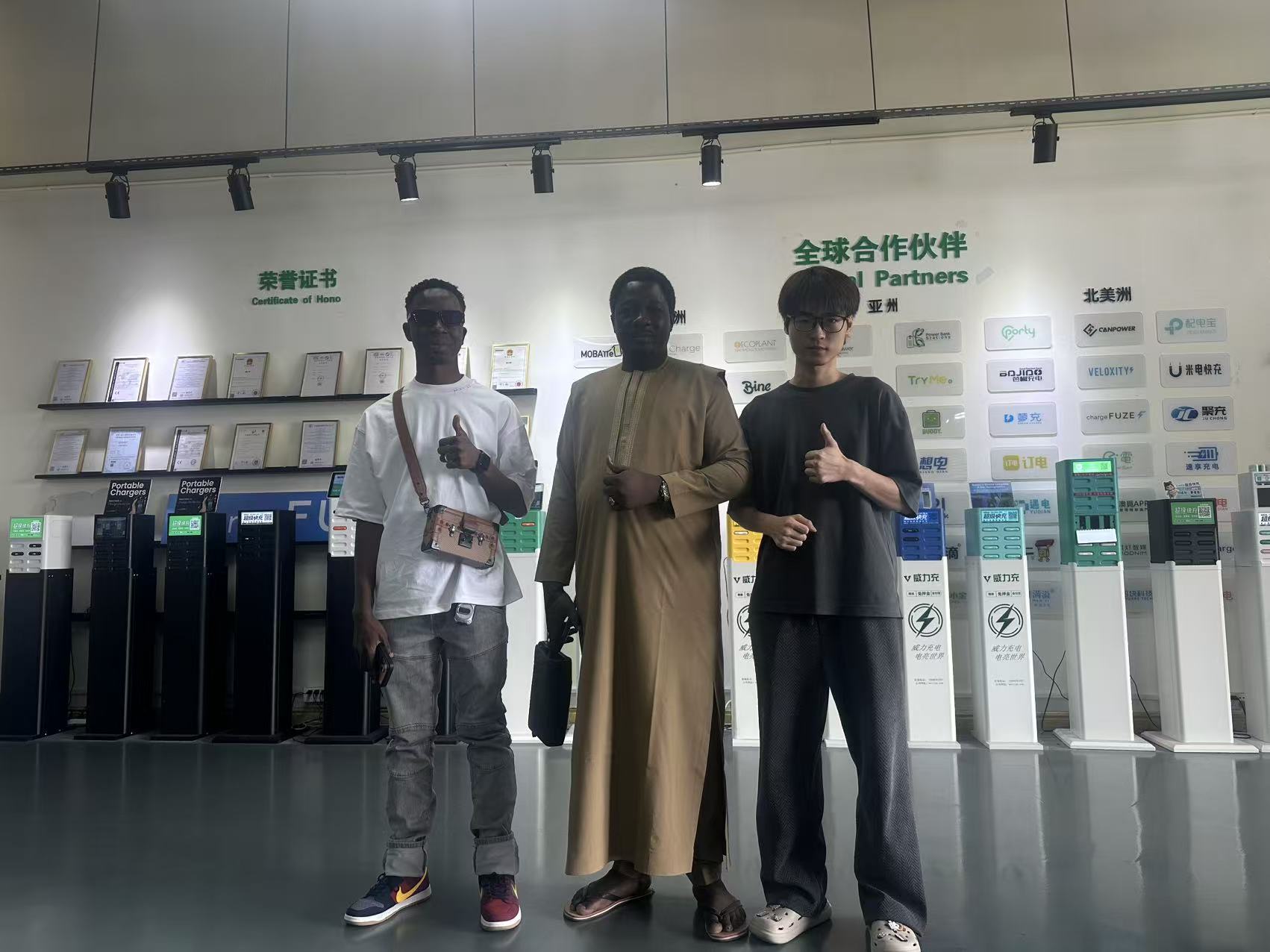
From Factory Visit to 500-Unit Launch: How Chaaks Chose WeLink for Its African Shared Power Bank Expansion
The shared power bank station Africa market is entering a new stage of growth as operators look for reliable hardware, localized software and experienced manufacturing partners. For Chaaks, building a scalable rental network across Kenya and other emerging markets began with one critical decision: choosing the right long-term supplier.
For a startup entering the shared power bank rental business, choosing the right shared power bank supplier is not simply about comparing hardware prices.
The real challenge is finding a long-term partner that can support hardware, software, localization, operations, after-sales service and future expansion.
This was exactly the situation Chaaks faced.
Chaaks is building a shared power bank rental network focused initially on Kenya, with future plans to expand into other markets including Congo, Uzbekistan and Lebanon.
Before making a final decision, the Chaaks team searched online for suitable suppliers, shortlisted several manufacturers and arranged factory visits in China.
After visiting the WeLink factory and holding in-depth discussions with the team, Chaaks decided to move forward with WeLink as its strategic hardware and technology partner.
Why Chaaks Chose WeLink
During the factory visit, Chaaks gained a clearer understanding of WeLink’s position in the shared power bank industry.
Unlike suppliers that only provide hardware, WeLink has built an integrated shared power bank ecosystem covering:
1:Hardware design and manufacturing
4:Mobile and Web-based rental systems
5:Operator management platforms
6:API integration
7:Remote device monitoring
8:Payment integration
9:OEM and ODM customization
10:Global after-sales support
This complete hardware-and-software capability was an important factor in Chaaks’ decision.
For a company planning to build a large rental network across multiple countries, system scalability and long-term technical support are just as important as the equipment itself.
Proven Experience With International Operators
Another important reason for Chaaks’ confidence was WeLink’s long-term experience with international operators.
WeLink has worked with overseas shared power bank companies across North America, Europe, the Middle East and other regions.
One representative example is the long-term cooperation between WeLink and ChargeFuze, which has continued for approximately seven years.
Such projects demonstrate that WeLink is not only capable of supplying equipment for a small pilot, but can also support operators as they scale into larger multi-location networks.
For Chaaks, this experience provided additional confidence that WeLink could support the project beyond the first order.
Localized Software for the African Market
Software localization was another major topic during the discussions.
Every market has different user habits, payment methods, languages and operating requirements.
WeLink explained that the rental software can be customized according to local business needs.
Depending on the project, localization can include:
1:Local language interfaces
2:Local payment gateway integration
3:Custom rental pricing
4:Deposit settings
5:Merchant management
6:Customer management
7:Cross-location rental and return
8:Operator dashboards
10:API integration
11:White-label branding
This flexibility gives Chaaks the ability to build its own local brand rather than operating under a generic supplier platform.
OEM Hardware and Brand Customization
Hardware can also be customized.
Chaaks can apply its own branding to shared power bank stations and power banks, including:
1:Company logo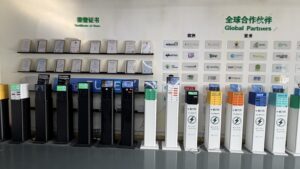
2:Station appearance
3:Housing graphics
4;Power bank branding
5:QR code design
6:Screen content
7:User interface
8:Packaging
This is especially important for a company planning to build a recognizable network across multiple countries.
A consistent brand across hardware and software can improve customer recognition and merchant confidence.
More Than a Supplier Meeting: Discussing How to Operate the Business
One of the most valuable parts of the factory visit was that the conversation went far beyond product specifications.
The WeLink team and Chaaks discussed many practical operating questions that every new shared power bank operator eventually faces.
For example:
How Should Stations Be Deployed?
Different locations require different station capacities.
Restaurants, cafés and hotels may be suitable for compact desktop stations, while airports, shopping malls and busy entertainment venues may require larger-capacity models.
Deployment density also matters.
A rental network becomes more convenient when customers can easily find another compatible station nearby.
Why Can Power Bank Returns Fail?
The two teams discussed common return-related issues, including:
1:Incorrect insertion
2:Communication delays
3:Slot recognition problems
4:Network interruptions
5:User misunderstanding
6:Abnormal order status
Understanding these situations early helps operators prepare better customer-service procedures and technical support workflows.
How Should Hourly Rental Pricing Be Set?
Pricing cannot simply be copied from another country.
Rental rates should consider:
1:Local spending power
2:Venue type
3:Customer urgency
4:Competitor pricing
5:Average usage time
6:Deposit amount
7:Merchant positioning
A customer in a nightclub may accept a higher hourly rate than a customer in a regular restaurant.
Operators can also test different pricing strategies and adjust them according to real usage data.
How Can Local Users Be Encouraged to Try the Service?
For a new market, customer education is important.
The teams discussed methods such as:
1:Clear rental instructions
2:QR-based rental
3:Promotional pricing
4:Merchant recommendations
5:Visible station placement
6:Advertising screens
7:First-use incentives
The goal is to make the rental process simple enough that first-time users can understand it immediately.
Can Customers Return the Power Bank at Another Store?
Yes.
Cross-location return is one of the most important advantages of a shared power bank network.
A customer can rent at one location and return the power bank at another compatible station in the same network.
This greatly improves convenience and becomes even more valuable as the number of locations increases.
What Happens if the Customer Does Not Return the Power Bank?
The teams also discussed deposit and non-return policies.
Operators can configure rental limits and deposit rules according to their local strategy.
If a user does not return the power bank within the specified period, the system can apply the relevant deposit or maximum charge according to the configured business logic.
This helps reduce the financial risk associated with lost power banks.
What About Warranty, Spare Parts and Repairs?
Chaaks also asked detailed questions about long-term maintenance.
These included:
1:Product warranty
2:Spare parts availability
3:Replacement components
4:Repair support
5:Remote troubleshooting
6:Software maintenance
7:Future upgrades
For a growing operator, these issues are critical.
A large station network cannot depend on replacing complete machines every time a small component fails.
Reliable after-sales support therefore became another key reason for Chaaks to work with WeLink.
Professional Support for a Startup Team
Chaaks appreciated not only the technical answers, but also the patience and practical experience of the WeLink team.
For a startup, understanding the operating logic of the business is extremely important.
The discussions helped Chaaks better understand:
1:How the rental system works
2:How to build a deployment strategy
3:How to structure pricing
4:How to reduce equipment-loss risk
5:How to manage merchants
6:How to expand from a pilot into a larger network
7:How to prepare software and payment localization
These insights helped Chaaks build a clearer commercial roadmap.
In the early stage of a new project, this type of operational knowledge can be as valuable as the hardware itself.
Strong Local Resources Across Africa
Chaaks explained that its team already has extensive experience in internet infrastructure construction, operation and maintenance across Africa.
The company also has access to a wide range of potential deployment locations, including:
1:Hotels
2:Bars
3:Airports
4:Restaurants
5:Commercial venues
This existing network gives Chaaks an important advantage when entering the shared power bank market.
Rather than starting from zero, the company can leverage its current relationships and operational resources to accelerate station deployment.
Kenya’s growing digital economy and mobile connectivity also create favorable conditions for technology-enabled rental services.
Building a Shared Power Bank Station Africa Network from Kenya
Chaaks sees Kenya as the starting point for a broader shared power bank station Africa strategy.
After the initial production order is successfully deployed, Chaaks plans to expand step by step into additional countries, including Congo, Uzbekistan and Lebanon.
The long-term vision is not limited to operating a small local rental network.
Chaaks hopes to become a major regional operator, similar to established international shared charging brands such as ChargeFuze and ChargeSPOT.
The company expects that successful deployment in Kenya will create a foundation for expansion across multiple emerging markets.
A Long-Term Vision for Africa
Chaaks also expressed a strong interest in building an even deeper strategic relationship with WeLink.
As the business becomes more established, Chaaks hopes to become WeLink’s key operating partner for the African market.
The concept discussed was that Chaaks could independently develop local customers, expand merchant networks and manage regional operations, while consolidating equipment orders through WeLink.
Chaaks even proposed a future model in which certain African customer inquiries received by WeLink could be introduced to Chaaks, allowing Chaaks to function almost like a local extension of WeLink’s African business.
WeLink responded positively to this long-term vision.
Both sides agreed that Africa represents a large and underdeveloped shared charging market with significant growth potential.
The goal is not simply to complete one order, but to explore a deeper partnership that can grow together with the market.
A Full Day of Discussion Ends With Chinese Hot Pot
After a full day of factory visits, technical discussions and business planning, the WeLink team invited the Chaaks delegation to dinner.
The group experienced a traditional Chinese hot pot dinner at Haidilao.
The dinner provided a relaxed conclusion to an intensive day of meetings and helped both teams strengthen their relationship beyond formal business discussions.
By the end of the visit, Chaaks confirmed its first major order of 500 sets.
One Month Later: Software Completed and Goods Arrive in Kenya
Following the agreement, the next phase moved quickly.
Over approximately one month, the WeLink team completed the required software development and project preparation.
The first shipment has now successfully arrived at Chaaks’ office in Kenya.
Hardware, software and operational planning are progressing according to schedule.
The project is now moving from planning into real deployment.
Conclusion: From Supplier Selection to Strategic Partnership
The cooperation between Chaaks and WeLink shows that a successful shared power bank project requires much more than purchasing charging stations.
It requires:
1:Reliable hardware
2:Localized software
3:Flexible payment integration
4:Clear operating strategies
5:Strong after-sales support
6:Scalable system architecture
7:Long-term cooperation between manufacturer and operator
For Chaaks, the factory visit provided not only confidence in WeLink’s manufacturing capability, but also a clearer understanding of how to build and operate the business.
For WeLink, Chaaks represents more than a customer.
It represents a potential long-term strategic partner for the African market.
With the first 500-unit order confirmed, software development completed and the goods now successfully delivered to Kenya, the cooperation has already moved from discussion to execution.
The next chapter will be written in the market itself.
From Kenya to Congo, Uzbekistan, Lebanon and potentially more countries, both teams are now working toward the same goal: building a scalable, localized and commercially sustainable shared power bank network.
The Chaaks project demonstrates how the shared power bank station Africa market can be developed through a combination of local resources, scalable technology and long-term manufacturing support.
WeLink looks forward to growing together with Chaaks and helping build one of the next major shared charging networks in Africa and beyond.