

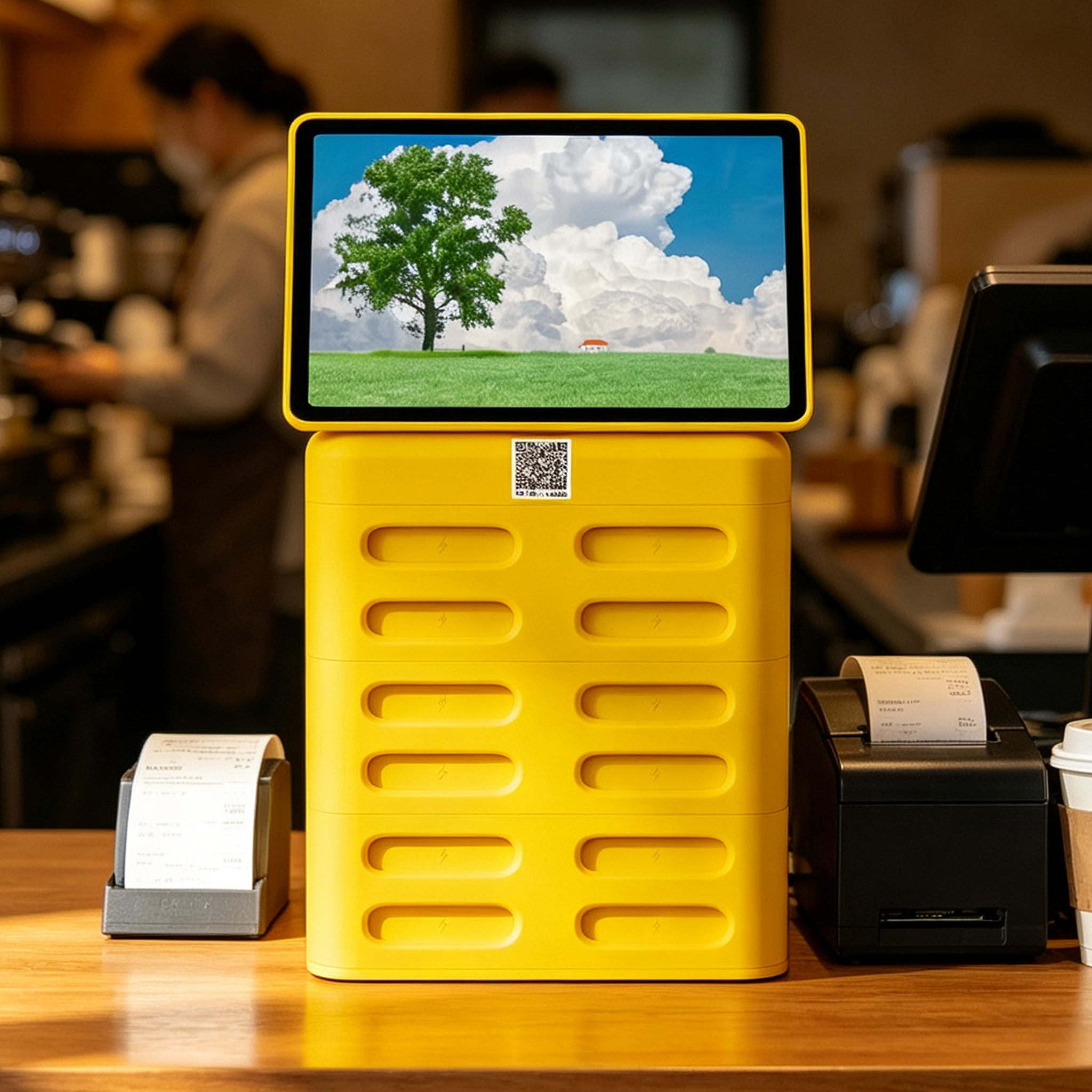
Shared Power Bank API Benefits for Rental Operators
Shared power bank API benefits go far beyond basic device connectivity. For rental operators, an open API makes it easier to connect charging stations with custom software, payment systems, Apps and backend platforms while maintaining greater control over the entire rental network.
Some operators prefer to use a complete white-label platform, while others already have their own mobile app, payment system, membership platform or management backend.
In these situations, replacing an existing software ecosystem is often unnecessary.
Fast API Integration for Shared Power Bank Rental Systems
allowing customers to connect our charging stations and related services with their own software platforms.
With an experienced hardware and software engineering team, we can quickly evaluate customer requirements, provide the necessary technical interface support and assist with testing and deployment.
This gives operators greater flexibility to build a shared charging solution that fits their existing business model.
What Is API Integration for a Shared Power Bank System?
An API, or Application Programming Interface, allows two different software systems to communicate with each other.
In a shared power bank rental network, many actions happen simultaneously between:
1:Customer applications
2:Rental stations
3:Power banks
4:Cloud servers
5:Payment systems
6:Operator management platforms
For example, when a customer scans a QR code and rents a power bank, several actions may need to happen within seconds.
The customer’s application sends a rental request.
The cloud platform verifies the request.
The server communicates with the selected station.
The station receives an instruction to release a suitable power bank.
The rental order is created.
The customer’s application receives the rental result.
When the power bank is returned, the system identifies the return, calculates the rental duration and completes the order according to the operator’s business rules.
API integration allows these processes to connect with the customer’s own software ecosystem.
Shared Power Bank API Integration With Your Own App
One of the main advantages of working with VSCHARGE is that we provide both shared power bank hardware and software technical support.
Our engineering team understands the communication between the charging station, cloud platform and rental system.
This makes API integration more efficient than working with a hardware supplier that only manufactures the physical station but does not understand the complete software architecture.
When customers provide their technical requirements, our engineers can evaluate the integration method and quickly coordinate the required interface development and testing.
The objective is simple:
Help customers connect their existing software with our shared power bank hardware as efficiently as possible.
Connect VSCHARGE Hardware With Your Own App
Many established companies already have their own mobile applications.
They may operate:
1:Payment apps
2:Lifestyle apps
3:Transportation apps
4:Hotel platforms
5:Shopping applications
6:Loyalty programs
7;Super apps
8:Event applications
9:Membership systems
Instead of asking their customers to download another independent app, they may want to add power bank rental directly into their existing application.
API integration makes this possible.
The customer can maintain their own brand and user interface while integrating the rental functions required to communicate with VSCHARGE-supported equipment.
This is particularly useful for operators that already have an established user base.
Integrate With Your Own Backend Platform
Some customers do not need a complete white-label management platform because they already operate their own backend system.
In this situation, API integration can provide greater flexibility.
Depending on the project architecture and agreed technical scope, the customer’s backend can communicate with the shared power bank rental system to support business processes such as:
1:Station identification
2:Rental requests
3:Power bank release
4:Rental order creation
5:Return processing
6:Order status synchronization
7:Device information exchange
8:User rental status
9:Rental result confirmation
The exact integration structure can be determined according to the customer’s existing software architecture and project requirements.
Support for Local Payment Integration
Payment integration is one of the most important requirements for international shared power bank projects.
Different countries use different payment ecosystems.
A shared power bank operator may need to support:
1:Credit and debit cards
2:Digital wallets
3:QR payments
4:Local payment gateways
5:Mobile money
6:Existing customer wallets
7:Proprietary payment platforms
Instead of forcing every market to use exactly the same payment method, API-based integration provides greater flexibility.
For customers with their own payment infrastructure, our technical team can work with the customer’s engineers to determine how rental orders, payment confirmation and device release should communicate within the overall system.
This is especially valuable in markets where local payment methods dominate consumer transactions.
API Integration for QR-Code Rental
QR-code rental is one of the most common user flows in the shared power bank industry.
A typical process can look like this:
Scan QR Code → Open Rental Page → Complete Payment or Authorization → Send Rental Request → Release Power Bank → Start Rental
For customers developing their own WebApp or mobile application, API integration can connect this front-end rental experience with the shared charging equipment.
This gives operators greater control over the customer journey while still benefiting from VSCHARGE hardware and technical support.
Remote Station Control and Device Communication
A shared charging system is an IoT network rather than simply a group of power banks.
Every station needs to communicate with a server.
The system must continuously manage equipment status and rental activity.
Depending on the technical solution used for a project, the integration may involve communication related to:
1:Station status
2:Device identification
3:Slot information
4:Power bank information
5:Rental instructions
6:Return status
7:Remote commands
8:Equipment monitoring
9:Network communication
10:Firmware and device information
Because VSCHARGE works with both the hardware and the supporting software system, our engineers can help customers understand how these different components interact.
Faster Integration Through Direct Engineering Support
API integration becomes much more difficult when communication must pass through several suppliers.
For example:
Customer → Trading Company → Hardware Factory → Software Company → Engineer
Every additional layer can increase communication time and create misunderstandings.
VSCHARGE provides direct technical support for integration projects.
When necessary, the customer’s software engineers can communicate directly with our technical team regarding:
1:API requirements
2:Communication logic
3:Interface parameters
5:Testing procedures
6:Device behavior
7:Rental workflow
8:Error handling
9:Deployment requirements
This can significantly improve integration efficiency.
For technical projects, direct engineer-to-engineer communication is often one of the fastest ways to identify and solve integration issues.
A Clear API Integration Process
To make development more efficient, we recommend defining the technical architecture before large-scale hardware deployment.
Requirement Analysis
The customer explains the existing software environment and desired rental process.
For example:
1:Does the customer already have an app?
2:Is there an existing backend?
3:Which payment gateway will be used?
4:How should users start a rental?
5:How should rental pricing be calculated?
6:What information needs to be synchronized?
7:Does the customer require remote device control?
This helps both technical teams determine the appropriate integration structure.
Technical Evaluation
Our engineering team reviews the requirements and confirms which functions can use existing interfaces and which functions may require additional customization.
This stage helps avoid unnecessary development.
Interface Coordination
Both development teams confirm the required communication logic, parameters and workflows.
The goal is to make sure the customer’s software can communicate correctly with the shared power bank system.
Development and Testing
The customer and VSCHARGE engineers begin integration and testing.
Testing can cover the complete rental process, including:
User Request → Payment Confirmation → Device Communication → Power Bank Release → Rental Order → Power Bank Return → Order Completion
Pilot Deployment
Before large-scale rollout, we recommend testing the integrated solution with a small number of stations.
This allows both teams to verify the real-world performance of:
1:Network communication
2:Rental requests
3:Payment flow
4:Station response
5:Power bank release
6:Return recognition
7:Order synchronization
Large-Scale Deployment
After successful testing, the same technical architecture can be expanded to additional stations and locations.
This approach reduces risk and makes future network expansion easier.
API Integration vs. Full White-Label Software
Customers do not always need the same software solution.
VSCHARGE can support different cooperation models.
| Solution | Best For |
|---|---|
| Complete VSCHARGE System | New operators that need hardware and software together |
| White-Label Software | Companies building their own shared power bank brand |
| API Integration | Companies with an existing app, backend or software platform |
| Hardware + Technical Interface | Experienced software companies developing their own ecosystem |
| Customized Integration | Projects with special payment or operating requirements |
This flexibility allows customers to choose a technical model based on their actual business needs rather than rebuilding systems unnecessarily.
Who Should Consider API Integration?
API integration is particularly suitable for companies that:
1:Already have their own mobile app
2:Already have a software engineering team
3:Operate an existing payment platform
4:Want to integrate shared charging into a super app
5:Need a local payment gateway
6:Want to maintain their existing customer database
7:Already operate a membership or loyalty platform
8:Need custom rental logic
9:Want greater control over the customer interface
10:Plan to build a large proprietary shared charging network
For these customers, API integration can provide a balance between hardware reliability, development flexibility and software independence.
Why Hardware and Software Experience Matter
One of the biggest challenges in developing a shared power bank platform is not designing the app interface.
The difficult part is making the entire system work reliably together.
The customer app must communicate with the server.
The server must communicate with the station.
The station must correctly identify and release the power bank.
The system must record the rental.
The return must be recognized.
The order must be completed correctly.
If any part of this chain fails, the user experience can be affected.
This is why working with a supplier that understands both hardware and software is important.
VSCHARGE combines shared power bank manufacturing capabilities with software development and technical integration support, helping operators reduce communication complexity during project development.
Build Your Own Brand Without Starting From Zero
API integration gives operators another option between using a completely standardized system and developing everything independently.
Customers can keep the parts of their existing technology that already work while integrating VSCHARGE shared charging equipment where necessary.
This can help reduce:
1:Development time
2:Integration risk
3:Hardware communication complexity
4:Repeated software development
5:Time to market
At the same time, operators maintain greater control over their brand, customer experience and local business model.
Supporting Projects From Pilot Testing to Large-Scale Deployment
Whether you are testing a small shared power bank project or preparing a large deployment, technical architecture should be considered from the beginning.
Our team can work with customers during different stages of the project, including:
1:Technical requirement analysis
2:Hardware selection
3:API integration
4:Payment integration
5:Software customization
6:Device testing
7:Pilot deployment
8;Remote technical support
9:System optimization
10:Network expansion
For customers with their own technical teams, we can communicate directly with their engineers to accelerate the integration process.
Conclusion
A successful shared power bank rental business requires more than reliable charging stations.
Hardware, software, payments, cloud communication and device management must work together as one complete system.
With VSCHARGE API integration support, operators do not have to abandon their existing apps, payment platforms or backend systems.
Our technical team can work with your developers to quickly evaluate requirements, coordinate interfaces, test device communication and prepare the integrated solution for commercial deployment.
Whether you need a complete white-label shared power bank platform or want to integrate VSCHARGE hardware into your own software ecosystem, we can provide a flexible technical solution for your project.
Need API Integration for Your Shared Power Bank Project?
If your company already has its own app, backend platform, payment system or engineering team, contact VSCHARGE and share your technical requirements with us.
Our engineers can evaluate your existing architecture and help determine the most efficient way to connect your software with our shared power bank rental stations and hardware platform.
Want to connect our hardware with your own software and payment system? Learn more about our shared power bank API integration solution.