

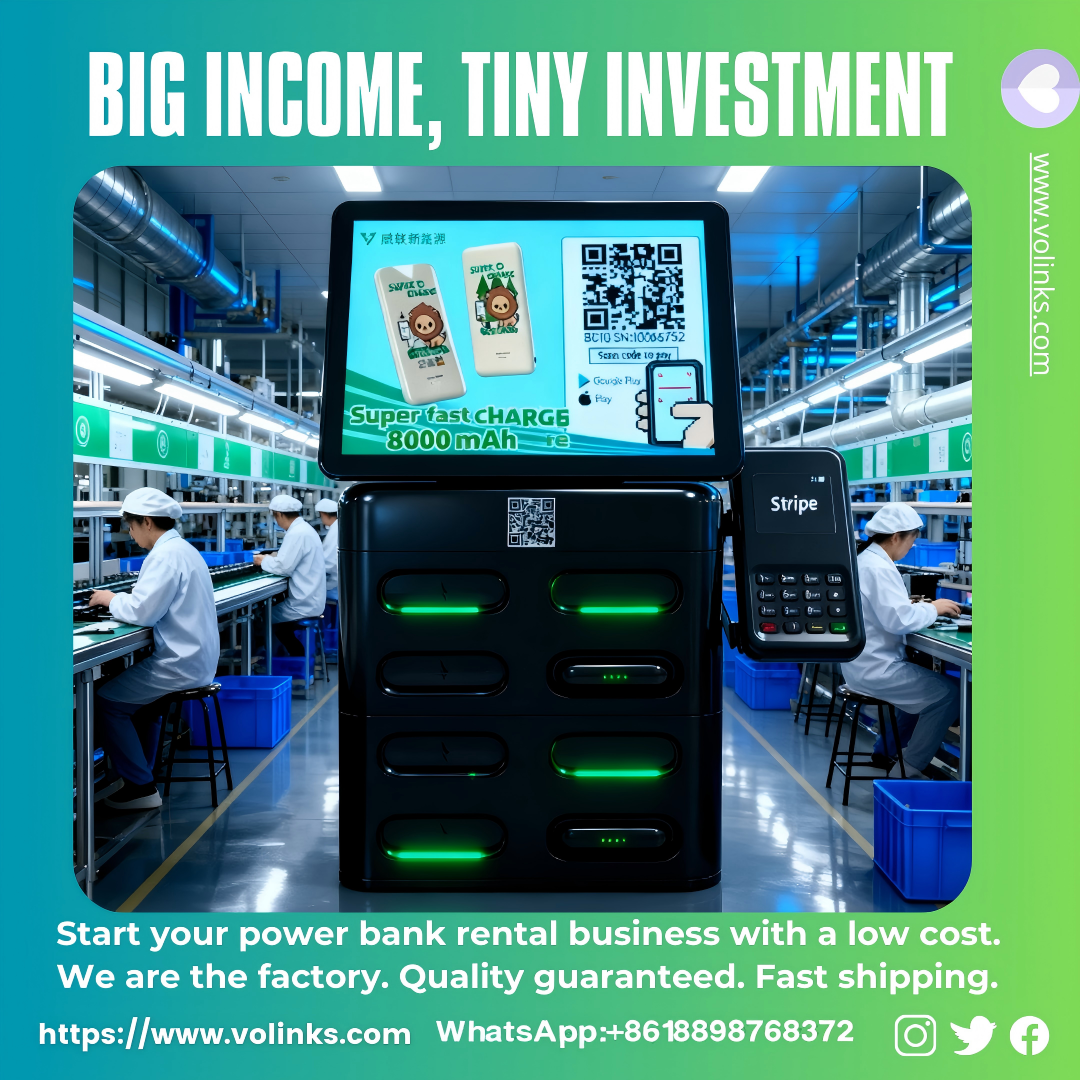
Portugal shared power banks: New upgrade with direct factory supply and targeted placement to fill local charging gaps.
Welink Energy delivers a mature and systematic solution for small and medium-sized enterprises (SMEs) intending to enter the shared portable charging station industry. A full set of customizable rental services enables operators to adjust service portfolios dynamically in response to local market changes and maintain long-term market competitiveness. The combination of high-power fast charging technology and ultra-low standby power consumption effectively controls daily operational costs while significantly elevating end-user experience.
The adoption of a zero minimum order quantity (MOQ) policy substantially lowers market entry thresholds, allowing startup ventures to launch businesses with a small batch of devices. Supported by a well-established global service network and efficient logistics distribution system, the company can deliver timely after-sales and supply support to partners across different regions. Equipped with the above comprehensive strengths, market participants are able to tackle operational challenges steadily and realize sustainable business expansion within the shared charging sector.
1. Customized Shared Charging Rental Services for SMEs
Welink New Energy provides flexible and tailor-made rental solutions targeted at SMEs entering the shared charging market. The implementation of the zero-MOQ policy enables new operators to launch businesses on a small scale and optimize their device fleet size in accordance with localized market demands.
Hardware customization is available to meet diversified consumer requirements, with mainstream configurations including 22.5W fast charging modules to improve charging efficiency. The rental business model features strong scalability: operators can expand device inventory gradually alongside business growth, without being burdened by substantial upfront capital investment. All products have obtained internationally recognized compliance certifications such as CE and FCC, ensuring reliable product quality and operational safety for global deployment.
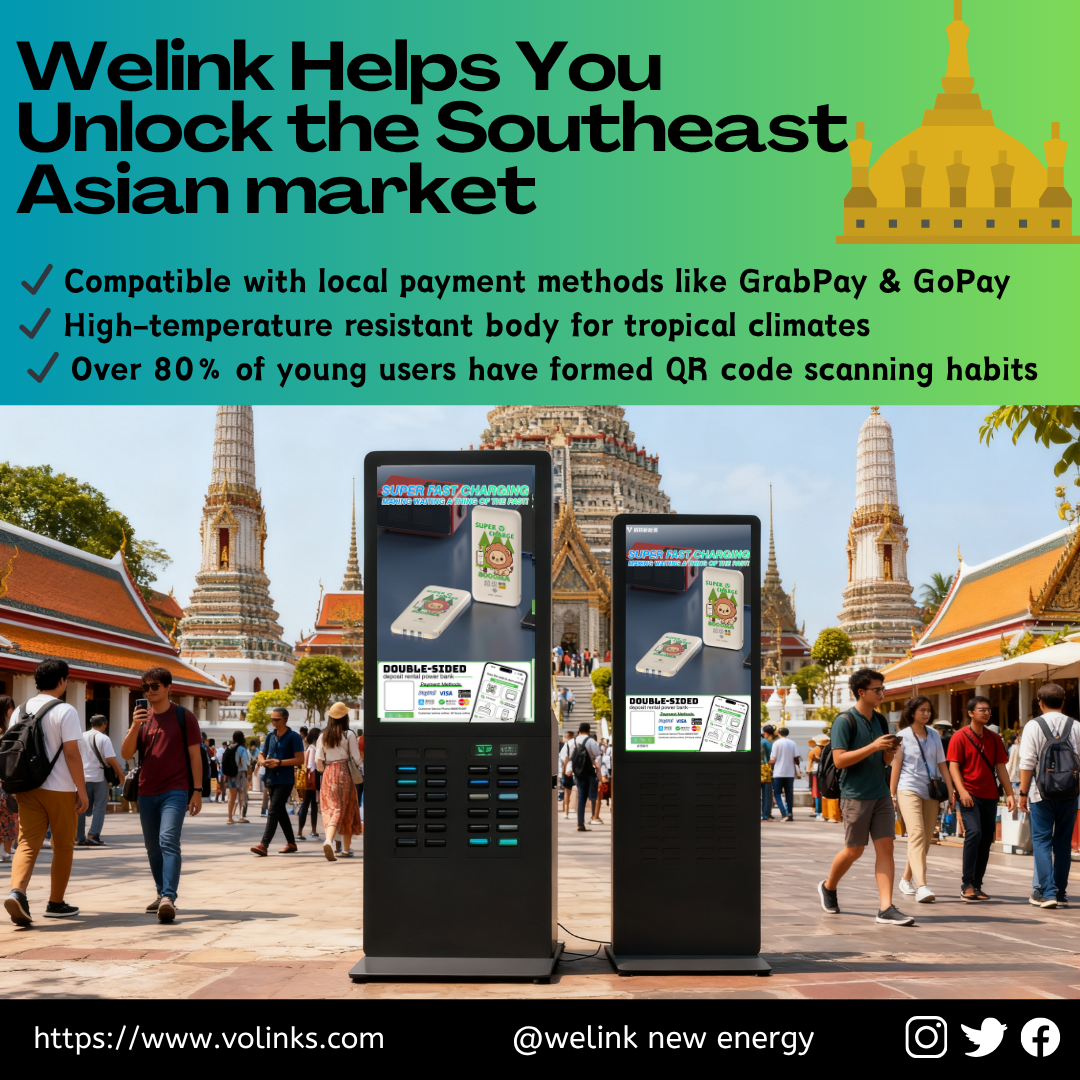
Operators are advised to iterate service content based on continuous customer feedback so as to maximize user satisfaction. Given that market demand fluctuates with seasonal cycles and large-scale events, product and service customization has become a core factor for sustaining market competitiveness. Welink’s service philosophy focuses on win-win cooperation and adaptive operation amid a rapidly evolving industry landscape. The flexible service framework also builds solid confidence for small-scale market players to step into the shared charging track.
2. High-efficiency Charging Hardware & Integrated Service System
Against the backdrop of booming market demand for high-performance shared charging facilities, Welink New Energy develops proprietary hardware products and standardized supporting services to address industry pain points. The company’s portable charging stations adopt advanced charging solutions, which can replenish 80% of a mobile device’s battery capacity within 30 minutes.
In terms of energy consumption control, the standby power consumption of each device is limited to 0.26 kW·h per day, which helps operators cut down ongoing operational expenditure and secure profit margins while meeting public demands for convenient on-the-go charging. Meanwhile, integrated user-friendly software systems serve as an important complement to hardware facilities, including dedicated rental applications and centralized admin dashboards with multi-language functions, which are highly adaptable to markets worldwide.
The one-stop service system greatly simplifies daily management work for SMEs operating in this competitive industry. In addition, the zero-MOQ rule further facilitates market access for emerging operators, making high-quality shared charging services accessible to all types of market participants. The core product features are summarized in the table below:
3. OEM & ODM Customization Services
Welink New Energy offers professional OEM and ODM services tailored to the operational characteristics of shared charging station operators. For OEM services, clients are able to procure standard high-quality portable charging stations with no minimum order restriction, which greatly lowers the barrier for small-scale trial operation.
ODM services provide in-depth personalized development, allowing clients to customize product appearance, brand identification and performance parameters to match differentiated market trends and consumer preferences. All products support 22.5W high-efficiency charging to ensure stable energy output. The company has established a streamlined R&D and production workflow: prototype sampling can be completed within 3 working days, and mass production can be launched within 30 days after client confirmation.
This efficient production cycle allows entrepreneurs to seize market opportunities rapidly. With optimized structural design and functional configurations, the products help operators maintain competitive operational costs throughout business expansion.
4. 22.5W Fast Charging Technology: Core Competitive Advantage
High-speed charging capability has become an indispensable core configuration for modern shared portable charging station systems. Welink’s 22.5W fast charging technology enables rapid power replenishment for mobile devices, delivering up to 80% battery level within 30 minutes.

This technology effectively shortens users’ waiting time during rental, increases the frequency of repeated consumption, and drives overall business performance improvement. In addition, fast charging functions fit well with the fast-paced lifestyle of contemporary consumers who pursue high efficiency. As mobile electronic devices become deeply integrated into daily work and life, reliable high-speed charging services serve as a key differentiator for rental operators to stand out from peers. Therefore, deploying advanced fast charging solutions is a strategic choice for shared charging service providers to attract and retain users, and ultimately boost revenue growth.
5. Low Standby Power Consumption: Cost & Environmental Benefits
Ultra-low standby power consumption brings tangible economic benefits to participants in the shared charging industry. Statistics show that each device with a daily standby power consumption of 0.26 kW·h can generate an annual electricity cost saving of approximately 95 RMB per unit. For operators, such energy efficiency improvement plays a vital role in expanding profit margins in the fiercely competitive market.
Furthermore, reduced energy consumption responds to the global advocacy for environmental protection and sustainable development, winning recognition from eco-friendly enterprises and consumers. Lower power usage cuts the carbon footprint of the whole service chain and shapes a responsible brand image for rental service providers. With the continuous advancement of industrial technology, low standby power consumption has evolved from an optional configuration to a basic industry standard. Integrating this design into products has become a necessary measure for enterprises to maintain competitiveness and deliver additional value to partners.
6. Development Trends of Global Shared Charging Market
The market demand for shared portable charging solutions keeps rising worldwide, driven by the universal reliance on various electronic devices. The core driving force lies in consumers’ growing pursuit of service convenience and spatial accessibility, especially in densely populated urban areas.
A large number of SMEs have identified the huge market potential and started to combine intelligent technology and refined customer service to satisfy public charging needs. Shared charging stations have been widely deployed in cafes, shopping malls and public transport hubs to deliver stable and accessible power supply services. Meanwhile, the popularization of mobile payment systems simplifies the entire rental process and further enhances the attractiveness of shared charging services.
Against such a market backdrop, hardware customization via OEM and ODM has become a mainstream means for operators to build differentiated advantages. Products featuring energy-saving designs and eco-friendly attributes cater to the demands of environmentally conscious groups while realizing operational efficiency optimization. Overall, the global shared charging market presents robust growth momentum, as market players continuously adapt to evolving consumer behaviors and technological upgrades.
7. Global Logistics & Distribution Layout
Welink New Energy has built a comprehensive global distribution system to support business development in more than 30 countries and regions. Strategic overseas warehouses have been set up in key locations including Singapore, Los Angeles and Hamburg, ensuring timely product delivery and localized technical support for international partners.
The mature global logistics network shortens transportation cycles and cuts overall shipping costs. Adopting the operator-direct settlement model with zero commission fees simplifies capital settlement procedures and attracts more entrepreneurs to join the shared charging industry. Localized cooperation mechanisms accelerate regional market penetration, enabling the company to adjust service contents to adapt to the characteristics of different regional markets. Relying on a robust supply chain and localized operational capabilities, Welink New Energy can respond flexibly to fluctuating market demands and establish long-term stable cooperative relationships with SMEs engaged in shared charging services.
8. Practical Guide to Launching a Shared Charging Rental Business
Launching a profitable shared portable charging rental business requires in-depth market research and proper resolution of logistical issues. To begin with, operators need to clarify target application scenarios, such as commercial plazas, transportation hubs and large-scale local events, where on-the-go charging demand is highly concentrated. Establishing formal cooperation with venue proprietors helps improve service visibility and user engagement.
Operators can leverage Welink’s diversified customization services to configure products matching local demands, without being restricted by minimum order requirements. In terms of marketing promotion, it is advisable to highlight the accessibility of rental services supported by multi-language mobile applications. Efficient logistics support is also a key factor for successful operation; partners can make full use of Welink’s global warehouse network to realize rapid equipment deployment and regional inventory allocation.
In addition, standardized customer service mechanisms should be established to ensure timely responses to user inquiries and technical faults. By streamlining operational procedures and maintaining market adaptability, entrepreneurs can effectively enter the high-growth shared charging market and capture steady returns.
9. Comprehensive Conclusion
As the global shared portable charging market continues to expand, SMEs are presented with enormous development opportunities. Timely adjustment to changing consumer demands and market preferences is the prerequisite for sustainable operation, and Welink New Energy’s full set of customizable solutions provides a solid operational framework for market players.
The integrated hardware and software system not only meets users’ requirements for service efficiency but also enhances the overall competitiveness of rental businesses. Meanwhile, energy-efficient product design aligns with both corporate cost-control goals and global sustainable development initiatives. Benefiting from the global logistics network, operators can cope with market volatility flexibly and guarantee continuous product supply.
By embracing advanced technologies and adhering to flexible operational strategies, SMEs can secure a solid market position in this booming industry and jointly promote the iterative upgrading of global shared charging services.
Frequently Asked Questions (FAQs)
Q1: What is the minimum order quantity for shared portable charging stations?
A: The company implements a zero minimum order quantity policy, allowing operators to start businesses with any number of devices.
Q2: What is the charging efficiency of the portable charging stations?
A: Equipped with 22.5W fast charging technology, the devices can charge a mobile device to 80% capacity within approximately 30 minutes.
Q3: What customization services are included in OEM and ODM solutions?
A: Customization covers hardware parameters such as charging power, as well as brand identity and functional configuration of supporting software applications.
Q4: What operational support is provided for rental business operators?
A: A complete service system is available, including rental applications and multi-language admin dashboards to assist daily operation and management.
Q5: Do the products comply with international safety standards?
A: Yes. All products have passed global mainstream compliance certifications, including CE, FCC, UL and RoHS.
Q6: What economic benefits does low standby power consumption bring to operators?
A: It can substantially reduce daily electricity expenditure, delivering continuous cost savings and improving long-term profitability.
Q7: Which regions does Welink Energy serve globally?
A: The company’s business covers more than 30 countries worldwide, with core overseas warehouses located in Singapore, Los Angeles and Hamburg.
Q8: Can rental service contents be adjusted according to market changes?
A: Yes. Operators can adjust device inventory and service rules based on user feedback and seasonal demand changes to maintain market competitiveness.
Q9: How quickly can a new rental business be launched with Welink’s support?
A: The sampling process takes 3 working days, and mass production can be launched within 30 days, supporting rapid market entry for new projects.
Core Revision Standards Followed
Terminology standardization: Unified industry professional terms in line with global consumer electronics and shared charging industry research reports; corrected the spelling error of the brand name and uniformly adopted Welink New Energy throughout the full text.
Tone optimization: Eliminated colloquial expressions and fragmented sentences, adopted objective, rigorous and formal narration consistent with official industrial journals and research columns.
Grammar & format rectification: Standardized capitalization, punctuation and sentence structure; unified title hierarchy, paragraph division and table layout in accordance with the reference report style.
Logical restructuring: Rearranged scattered descriptive content, sorted chapters by functional modules to improve overall readability and logical coherence.
Information retention: Fully reserved all original product parameters, data, service rules, market viewpoints and business guidelines, without adding or deleting any substantive content.