

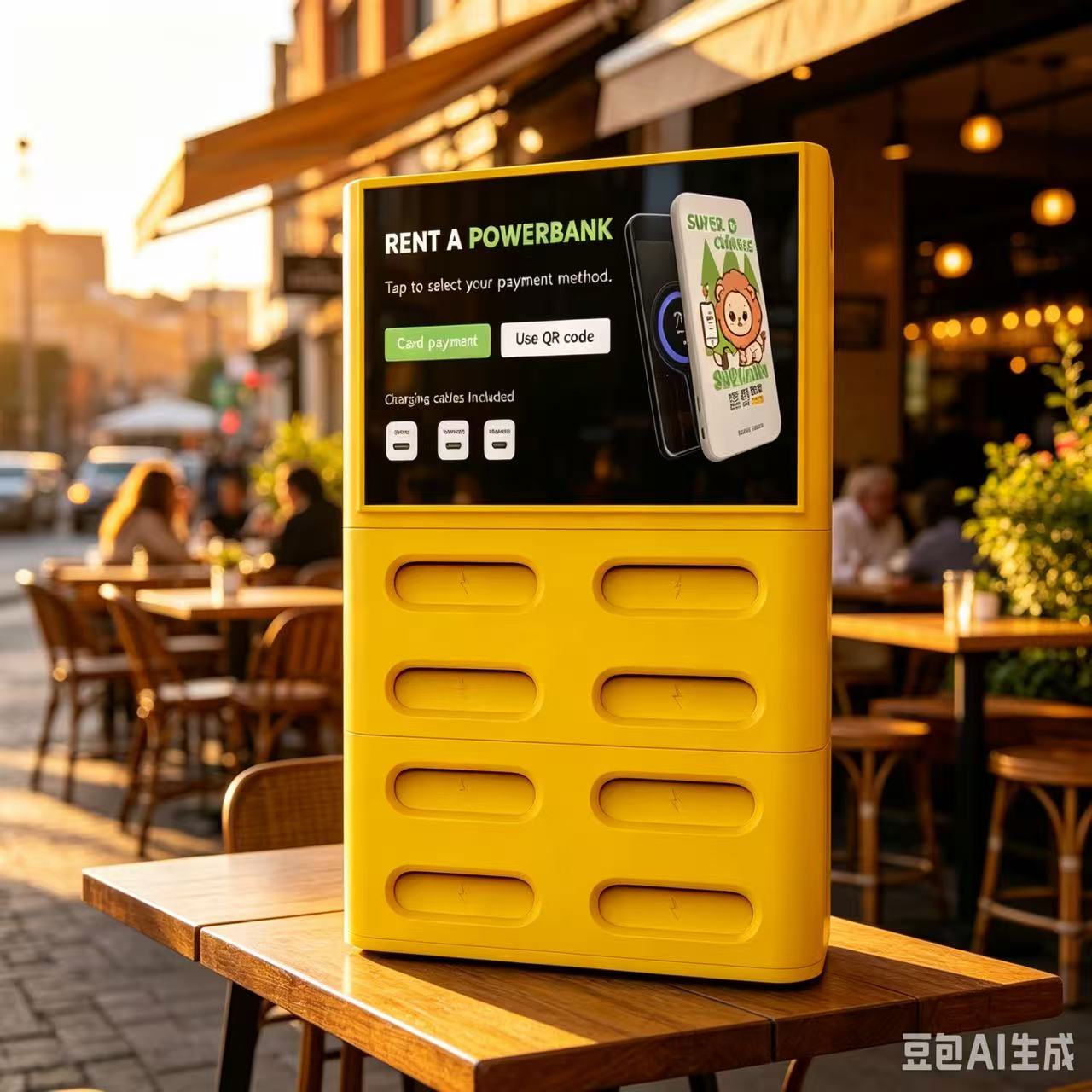
Shared Power Bank Business in Africa 2026: Complete Launch Guide
The shared power bank business in Africa is attracting increasing attention from entrepreneurs, payment companies, distributors and local investors looking for practical technology businesses that can be launched city by city.
But Africa should not be treated as one single market.
A successful power bank rental project in Nairobi may require a different payment method, pricing strategy and venue network from one launched in Lagos, Johannesburg, Addis Ababa or Casablanca.
For operators entering Africa in 2026, the biggest question is therefore not simply:
“Will people rent power banks?”
The more important questions are:
1:Can customers pay with the methods they already use?
2:Are stations installed at the right locations?
3:Can operators manage devices remotely?
4:What happens if network connectivity is temporarily unstable?
5:Can the business expand through local agents and merchants?
6:Can hardware and software be adapted to the local market?
This guide explains how to evaluate and launch a shared power bank business in Africa from a practical operating perspective.
1. Why the Shared Power Bank Business in Africa Deserves Attention in 2026
Mobile phones are becoming increasingly important to daily life across African markets.
People use smartphones for much more than calling and messaging. They are increasingly used for:
1:Mobile payments
2:Transportation
3:Social media
4:Navigation
5:Business communication
6:Online shopping
7:Food delivery
8:Entertainment
9:Banking and financial services
According to GSMA’s Mobile Economy Africa 2026 report, mobile technologies and services contributed approximately USD 240 billion to Africa’s economy in 2025, equivalent to 7.8% of GDP.
Smartphone adoption is also continuing to increase. GSMA research indicates that smartphones represented approximately 63% of mobile connections in Africa in 2025.
For a shared charging operator, this trend matters because the more daily activities depend on a phone, the more disruptive a low battery becomes.
A customer whose phone is nearly dead may lose access not only to communication but also to payments, maps, transportation bookings and other digital services.
A conveniently located rental power bank can therefore solve an immediate problem.
However, this does not mean every African city or every venue will automatically produce strong rental demand.
Market selection and location selection remain more important than simply buying large quantities of stations.
2. Africa Is Not One Shared Power Bank Market
One of the biggest mistakes an overseas supplier or new investor can make is to talk about “the African market” as if every country operates in the same way.
They do not.
Different countries may have different:
1:Payment habits
2:Languages
3:Currencies
4:Smartphone usage patterns
5:Banking systems
6:Mobile money providers
7:Network conditions
8:Import requirements
9:Customer purchasing power
10:Venue structures
For example, mobile money can be extremely important in some markets, while card payments or other digital wallets may be more common in others.
English may be sufficient for one market, while French, Arabic, Portuguese or another local language may be necessary elsewhere.
Therefore, a power bank rental business in Africa should be localized country by country.
Before ordering hundreds of machines, operators should first confirm three things:
Payment → Location → User Experience
If these three elements work, the hardware can then be scaled.
3. Mobile Money Integration Can Be More Important Than the Station Itself
Payment is one of the most important parts of a shared power bank business in Africa.
The traditional rental process is simple:
Scan QR Code → Pay → Power Bank Releases → Use → Return → Final Billing
But this process only feels simple when the payment method matches what local customers already use.
Mobile money is particularly important across many African markets.
GSMA reported more than 1.1 billion registered mobile money accounts in Sub-Saharan Africa, with transaction value reaching approximately USD 1.1 trillion in 2024.
Merchant payments through mobile money are also expanding, which creates a stronger foundation for QR-based and mobile-first rental services.
For operators, this means payment integration should be evaluated before mass hardware deployment.
Depending on the country, possible payment methods may include:
2:Credit/debit cards
3:Local e-wallets
4:QR payments
5:Bank-based payment systems
6:Apple Pay or Google Pay where available
A good approach is to identify the most widely used local payment provider first and obtain its API documentation.
The technical team can then evaluate whether it can be integrated into the rental system.
VSCHARGE can adapt the rental software to local payment requirements rather than forcing every country to use the same payment method.
4. QR Rental Without App Download Can Reduce Friction
For a new shared power bank business in Africa, forcing every customer to download an app can create unnecessary barriers.
A web-based H5 rental process can be simpler:
1:Customer scans the QR code.
2:Rental page opens in the browser.
3:Customer selects or completes payment.
4:Station releases the power bank.
5:Customer returns it to an available station.
There is no requirement to search an app store, download an application and complete a long registration process before charging.
This can be especially useful when:
1:The brand is new
2:Customers have never used the service before
3:The venue has many tourists
4:Rentals are occasional rather than daily
5:The operator wants to reduce customer onboarding steps
An App can still be added later when the network becomes larger and repeat usage justifies it.
5. Start With One City, Not an Entire Country
A common question from new operators is:
“How many stations should I buy?”
There is no universal answer.
For most new markets, the safer approach is to start with a controlled pilot.
For example:
1:Select one city
2:Deploy several station types
3:Test different venue categories
4:Compare rental frequency
5:Monitor payment success
6:Track customer complaints
7:Identify high-performing locations
Instead of spreading machines randomly across an entire country, build density in a smaller operating area first.
Once the model works, it becomes much easier to copy the same deployment method into another district or city.
This is particularly important for a shared power bank business in Africa, because consumer behaviour, payment infrastructure and venue economics can vary significantly even within the same country.
6. Best Locations for Shared Power Bank Stations in Africa
The best locations are generally places where three conditions overlap:
High foot traffic + long customer stay + heavy smartphone usage
Potential locations include:
Restaurants and Cafés
Customers may stay for 30 minutes to several hours and often use their phones while eating, working or meeting friends.
Compact 8-slot or 12-slot stations can be suitable for many locations.
Bars and Nightlife Venues
Nightlife environments can generate strong charging demand because customers stay for long periods and frequently use phones for social media, messaging and transportation.
Larger stations or models with screens may be appropriate for busy venues.
Shopping Malls
Shopping centres combine high foot traffic with longer dwell time.
Depending on traffic, operators can consider 12-slot, 24-slot or larger stations.
Hotels
Hotels can provide charging services in:
1:Reception areas
2:Restaurants
3:Bars
4:Conference areas
5:Business lounges
Universities
Students are intensive smartphone users and often stay on campus for long periods.
Hospitals and Clinics
Waiting areas can create long dwell times and practical charging demand.
Airports and Transport Hubs
Travellers depend heavily on phones for tickets, transportation, communication, boarding information and navigation.
High-capacity stations may be more appropriate.
Events and Festivals
Concerts, football matches, exhibitions and festivals can create concentrated short-term charging demand.
For these scenarios, the operator can either permanently deploy equipment or rent stations to event organisers.
7. Don’t Copy China’s Mass-Deployment Model
The shared power bank model became highly developed in China partly because of dense cities, mature mobile payments and extremely high merchant coverage.
That does not mean overseas operators should copy the exact same strategy.
For many international markets, including parts of Africa, a small but efficient network can be more practical.
Instead of installing machines everywhere, focus first on:
1:High-quality venues
2:Strong merchant relationships
3:Locations with proven demand
4:Reliable payment
5:Easy return coverage
A station that generates frequent rentals is more valuable than ten stations sitting in poor locations.
VSCHARGE’s own overseas operating guidance therefore emphasizes refined location selection rather than blindly pursuing machine quantity.
8. Network Interruptions Should Not Automatically Become Customer Complaints
A shared power bank rental system depends on communication between:
User → Payment System → Cloud Platform → Charging Station → Power Bank
If the network signal is temporarily unstable, or a station experiences a power interruption during a return, the physical power bank may already be inside the cabinet while the rental order remains open.
For the customer, this is frustrating:
“I returned the power bank. Why am I still being charged?”
This type of problem can quickly create complaints.
Because VSCHARGE develops both its shared power bank hardware and software, the system can use automatic return reconciliation.
The system periodically checks the power banks inside the station.
If it detects that a power bank has already been returned while the corresponding rental order remains active, the system can automatically close the abnormal order.
This type of hardware-software interaction becomes especially valuable when an operator manages many stations and wants to reduce manual customer-service intervention.
9. Intelligent Power Bank Release Can Improve the Rental Experience
Another operational issue is the condition of the power bank released to the customer.
A basic rental system may simply release the next available unit.
VSCHARGE uses a more intelligent approach.
When multiple power banks are available in the cabinet, the software can compare factors such as:
1:Remaining battery level
2:Historical fault rate
The system can prioritize releasing a power bank with higher remaining charge and lower fault risk.
This means customers are more likely to receive a reliable, sufficiently charged unit.
For a growing power bank rental business in Africa, small improvements like this can have a significant impact once thousands of rentals take place across the network.
Better user experience means fewer complaints and stronger trust in the local brand.
10. Use the Backend to Monitor the Network Remotely
Managing 10 stations is relatively simple.
Managing 100 or 500 stations is different.
Operators need to know what is happening without physically visiting every store.
The VSCHARGE operation management backend allows operators to manage areas such as:
1:Rental orders
2:Members
3:Stores
4:Charging stations
5:Power banks
6:Cooperative accounts
7:Revenue
8:Profit
9:Device status
The management dashboard can also provide summarized business data for business owners, headquarters and investors.
This includes information such as:
1:Total orders
2:Revenue
3:Profit
4:Registered users
5:Stores
6:Cabinets
7:Power bank quantity
8:Device warnings
9:Online/offline status
Individual rental orders can also be opened for more detailed investigation, including payment status, order status, user information and deposit records.
For a multi-city shared power bank business in Africa, centralized management is critical for controlling operational costs.
11. Monitor Individual Power Banks, Not Just Charging Stations
The station is only one part of the system.
Power banks are rented, carried, charged and returned repeatedly, so operators also need to understand their condition.
The VSCHARGE backend can display operating data such as the current and voltage of individual power banks.
At the hardware level, each power bank incorporates multiple protection mechanisms, including:
1:Overcharge protection
2:Overcurrent protection
3:Overvoltage protection
4:Short-circuit protection
For operators building a long-term rental network, reliable hardware matters more than saving a small amount on the initial power bank purchase.
Every additional reliable rental cycle can generate additional revenue.
12. Agent Networks Can Help Expand a Shared Power Bank Business in Africa
A company does not necessarily need to operate every city with its own employees.
Local agent models can make expansion more flexible.
VSCHARGE software supports a multi-level agent structure.
A customized system can be structured as:
Headquarters → Level-1 Agent → Level-2 Agent → Merchant/Venue
The headquarters controls the overall system and can view network data.
A first-level agent can develop second-level agents.
Below the second-level agents are individual venues such as:
1:Cafés
2:Bars
3:Restaurants
4:Hotels
5:Retail stores
Different revenue-sharing ratios can then be configured within the backend.
This makes it possible for a shared power bank business in Africa to expand through local partnerships without requiring the headquarters team to directly manage every merchant relationship.
13. Venue Negotiation Is About More Than Revenue Sharing
When approaching a restaurant or bar, many operators immediately talk about:
“How much revenue will I share with you?”
That is important, but it should not be the only argument.
A shared power bank station also provides a service to the venue’s customers.
Consider this situation:
A restaurant customer has 3% battery remaining.
They still need their phone for:
1:Payment
2:Transportation
3:Messaging
4:Navigation
If the venue cannot provide a charging solution, the customer may leave earlier.
If the café or restaurant next door offers convenient power bank rental, that competing venue may become more attractive.
Therefore, when negotiating placement, operators can explain:
“This station is not only generating rental income. It also helps you serve and retain your own customers.”
This changes the conversation from:
“Can I put my machine in your store?”
to:
“Can we add a useful customer service to your store?”
That is a stronger business-development position.
14. Use Whitelist Privileges to Build Better Merchant Relationships
VSCHARGE software also supports whitelist or free-use privileges.
For example, when placing a station inside a bar, the operator can give:
1:The bar owner
2:Managers
3:Employees
free access to power bank rentals.
For the venue, this creates an immediate practical benefit.
For the operator, it can make station-placement negotiations easier and strengthen the long-term relationship with the merchant.
It is a small software function, but it can become an effective market-development tool.
15. Which Business Model Works Best?
There is no single operating model for every shared power bank business in Africa.
Several structures are possible.
Direct Operation
The company purchases equipment, negotiates locations and operates the network itself.
Advantage: Greater control over revenue and operations.
Agent Model
Headquarters recruits regional or city agents who develop local merchant networks.
Advantage: Faster geographical expansion.
Joint Operation
The operator provides equipment while local partners help with deployment and merchant relationships.
Revenue is shared according to agreed rules.
Event Rental
Stations can be rented to:
1:Music festivals
2:Concerts
3:Football matches
4:Exhibitions
5:Large public events
The operator earns equipment rental or power bank rental revenue without relying only on permanent merchant locations.
The right model depends on capital, local relationships and the size of the target market.
16. How Much Does It Cost to Start?
shared power bank business cost depends on:
1:Number of stations
2:Station capacity
3:Power bank quantity
4:Software requirements
5:Payment integration
6:Branding
7:Shipping
8:Local deployment
9:Operational staff
A new operator should avoid making ROI calculations based only on equipment price.
Software, logistics, payment fees, venue commissions and operating costs also need to be considered.
For a new shared power bank business in Africa, a pilot project can provide much more useful information than a theoretical nationwide forecast.
Start small, measure real rental frequency and expand after identifying profitable locations.
17. What to Look for in a Shared Power Bank Supplier
A supplier for an overseas rental project should provide more than charging cabinets.
Important capabilities include:
Hardware Development
The supplier should understand the station, communication board, charging system and power bank.
Software Development
The rental platform must communicate reliably with the hardware.
Payment Integration
Local payment APIs should be evaluated before deployment.
OEM and White Label
Operators should be able to build their own local brand.
Remote Technical Support
Long-term operation requires troubleshooting after installation.
Production and Testing
Shared power banks experience frequent daily use and therefore require consistent quality control.
VSCHARGE / Shenzhen Welink develops shared power bank hardware and software and provides OEM/ODM solutions for overseas operators.
Welink’s production system includes in-house product engineering, mold development, PCBA-related production processes, assembly and product testing.
The company also operates its own laboratory where raw materials, key components, semi-finished products and finished products undergo reliability verification.
This integration helps maintain better coordination between hardware production, software development and long-term technical support.
18. Why VSCHARGE for Africa Projects?
Launching a shared power bank business in Africa requires localization rather than simply exporting machines.
VSCHARGE can support operators with:
1:Shared power bank rental stations
2:Power banks
3:H5 web rental
4:Mobile App solutions
5:White-label branding
6:Local payment API integration
7:Multi-language interfaces
8:Remote device management
9:Intelligent power bank release
10:Automatic abnormal-return reconciliation
11:Agent management
12:Multi-level revenue sharing
13:Merchant whitelist privileges
14:Detailed order management
15Business dashboards
16:OEM/ODM customization
17:Technical support
Because the hardware and software are developed as an integrated system, operators can build a solution around their own local business model rather than adapting their entire operation to a generic platform.
Frequently Asked Questions
Is a shared power bank business profitable in Africa?
It can be profitable when stations are installed at suitable high-traffic locations and achieve sufficient rental frequency. Profitability depends on pricing, hardware costs, payment fees, merchant revenue sharing and operating expenses.
Which African countries are suitable for a power bank rental business?
There is no universal ranking. Operators should evaluate smartphone usage, digital payment adoption, local competition, venue availability, purchasing power and regulatory requirements in each target country before investing.
Can shared power bank stations support mobile money?
Yes, provided the local payment provider offers suitable APIs and the rental software can integrate with them. Payment compatibility should be evaluated before deployment.
Do customers need to download an App?
Not necessarily. A QR-code-based H5 rental system can allow customers to rent through a web page without downloading an App.
Can the system support French or other languages?
Yes. A white-label system can be localized according to the target market, including language, branding, rental rules and payment methods.
Can agents manage different regions?
Yes. A multi-level agent structure can be used to manage regional agents, sub-agents and individual merchants while configuring different revenue-sharing rules.
What happens if a customer returns a power bank during a network interruption?
With automatic return reconciliation, the system can periodically check returned power banks and close an outstanding rental order after confirming that the device has physically been returned.
What is the best way to start?
For most new operators, begin with one city and a controlled number of high-quality locations. Monitor rental frequency, payment success and customer behaviour before expanding to additional cities.
Start a Shared Power Bank Business in Africa With a Localized Strategy
The opportunity is not simply about placing charging stations in Africa.
Success depends on building a rental system that fits the local market.
That means combining:
Reliable hardware + local payment + strong locations + intelligent software + merchant partnerships + scalable operations.
Instead of starting with hundreds of stations, test the model in one city, identify high-performing venues, refine the payment and rental experience, and then replicate the model.
VSCHARGE provides integrated hardware, software, OEM customization and local payment integration support for companies building their own shared power bank brands.
Contact VSCHARGE to discuss your country, preferred payment method, target locations and pilot station quantity.