How Does a Shared Power Bank Business Make Money? Revenue Model Guide 2026
Q: How does the shared power bank business make money?
A:A shared power bank business generates revenue through multiple income streams, including rental fees, advertising opportunities and commercial partnerships.
Unlike traditional retail businesses, shared charging networks can create recurring income by deploying smart charging stations in high-traffic locations such as shopping malls, restaurants, airports and entertainment venues.
This guide explains how shared power bank operators make money and the key factors that influence profitability.
Advertising Revenue: Additional Profit Opportunities for shared power bank business
Core Income: User Rental Fees (Steady cash flow)This is the most basic and reliable money maker. We charge by time — e.g., first 5 mins free, then by 30 mins/hour. We even adjust prices for different spots:
Busy areas like downtown malls, bars, airports: Charge $3–$10 per hour (people need power badly here!);
Regular spots like restaurants, supermarkets: Charge $1.5–$3 per hour to stay competitive.
We also set a 24-hour max fee ($30–$40 usually). If users forget to return the power bank, they pay this fee — it’s like selling the power bank to them! One power bank only costs $30–$50, so 1–2 such “forgotten returns” cover the cost.The key? Choose high-traffic spots! A single power bank can be rented 4–8 times a day in hot places like popular restaurants or KTVs — that’s steady cash every day.
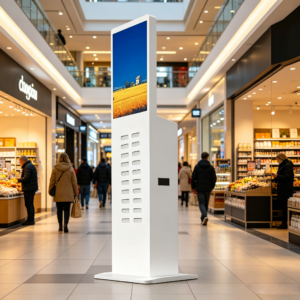
A smart shared power bank rental station deployed in a shopping mall to provide convenient charging services for customers.
Extra Income: Advertising (High-profit bonus)Power bank cabinets are walking billboards — ad profit margins can hit over 80% (way higher than rentals)!
Cabinet screen ads: Users stop for a few seconds to pick up/return devices, so they’ll definitely see the ads. Local shops (cafés, hot pot places) love this — it targets customers within 3 km;
App/mini-program ads: When users scan the QR code to rent, pop up a splash ad or let them watch an ad for 10 mins free charging — ad companies pay good money for this;
Brand partnerships: Team up with bubble tea shops or video platforms — e.g., “1 hour charging = 1 free coupon”. You earn a cut every time someone uses the coupon.
Bonus Income: Partnerships & extras (Little extras that add up)
Split profits with venue owners: Give a small cut of your rental/ad money to restaurant or hotel managers — they’ll let you place cabinets there. Even if you split more for a great spot, the high rental volume will make up for it;
Sell devices/franchise: If someone wants to start their own business, sell them devices at factory prices, or charge a franchise fee. They keep all rental money (after splitting with venues), and you make money from bulk sales;
Sell accessories: Add high-quality charging cables to your rental page — cheap to make, high profit, and easy extra cash.
In short, shared power bank business = steady rental cash + high-profit ads + bonus partnership money. Pick busy spots, and with our support, making money is a piece of cake!